What Is the Beast?
The Relationship Between The Revelation 17 Beast, The Woman, The 7 Heads, The 7 Kings, The 10 Horns, And Time
Introduction
There are a number of theories that attempt to explain the relationship between the Revelation 17 scarlet beast, the woman, the 7 heads, the 7 kings, the 10 horns, and time. But the Bible itself defines this relationship very clearly so that no mistake need be made about this. The purpose of this web page is to explain how the Bible makes that relationship abundantly clear. There are several ways the Bible makes this relationship clear to the reader, one of which clarifies the composition of the beast. The author calls the relationship, which defines the beast itself, the "The Beast Formula" because of its similarity to a chemical reaction formula. The Beast Formula will be explained through an analogy with a chemical reaction so that the reader will easily grasp the meaning. The Beast Formula is the central topic of this web page because, once this topic is understood, it can be used to explain the relationship between the various parts of the beast.
Do bear in mind that this formula applies ONLY to the leopard beast of Revelation 13 and the scarlet beast of Revelation 17 because the formula is described in relation to these two beasts only. Therefore, do NOT attempt to apply it to the dragon of Revelation 12 or the beasts of Daniel because doing so will lead to the wrong conclusions.
The purpose of studying the beast formula is to identify and gain understanding of the two main parts of the beast, and by this one is enabled to fully understand what the beast, its heads, and horns truly are. You will know the identity of the parts of the beast with certainty.
Revelation 13 tells you what "parts" are necessary to create a beast, which it does by telling you that there is a beast and by its behavior you can determine what "parts" make up the beast. In contrast, Revelation 17 tells you the parts that are already there. You just have to figure out that because the Bible gives you a parts list, it is actually creating a beast. That is the general idea behind this web page. Most people fail to grasp this very important, but subtle, point, and it causes them to fail to understand the beast and the woman.
This is a long web page, so take your time and study it carefully. The author would rather have written a short web page, but this subject is so deep that a short one cannot do justice to the material. Even this is not complete but will have to do. You will find it helpful to have a Bible handy. Quotes on this web page are taken from the King James Version (KJV) of the Bible.
Analogy - An Easy Miniature Chemistry Lesson
If you have ever taken a high school chemistry class, you may be familiar with the idea that you can put two chemicals together, react them together chemically, and the the chemical that comes out of the reaction may be something totally unlike either of the two chemicals you started with. A perfect example of this is the reaction between hydrogen and oxygen to form water.
At room temperature, hydrogen and oxygen are gasses, have no odor, are colorless (transparent), and both are vital to life in some way or another. We need oxygen in the air we breath to live. Oxygen enables us to extract energy from the food we eat, a process which is vital for life because, without energy, life ceases - and quickly. We need hydrogen in the body for many reactions, such as creating certain types of acids which have many uses in the body. For example, hydrogen helps form carbonic acid, which is the form carbon dioxide takes when it is being transported by the blood from the tissues to the lungs. This form of carbon dioxide is readily dissolved in water and is easily removed from the blood once it reaches the lungs. It also helps keep a balance between the acids and bases in the blood and body so that the enzymes of the body work correctly.
Water is very different in many ways from either hydrogen or oxygen. It is a liquid at room temperature and much more dense than hydrogen or oxygen (a cubic meter of water weights a great deal more than a cubic meter of oxygen at normal atmospheric pressure!) Like oxygen and hydrogen, water is absolutely essential for life on this world. Without it, there would be no life, at least, not life as we know it. For example, by acting as a near universal solvent, water is able to dissolve many chemicals and enzymes necessary for life to exist, which enables these chemicals and enzymes to get together to do their work. If water did not dissolve these chemicals, then they could not get together and life would simply cease to exist. Also, by filling up the space inside cells, water provides structural support for the more than 60 trillion cells that make up the human body. Virtually none of these tasks can be accomplished by either hydrogen or oxygen because their physical properties simply make them unsuitable.
Water molecules ordinarily have a small amount of electrical polarity to them, as if the water molecules are like little magnets, with a north and south pole (see illustration below). This is probably one of the most important characteristics of water known to science. They have this charge to them because the two hydrogen atoms that bond with the oxygen atom to form water attach themselves closer together on one side of the oxygen atom than they are on the other. Also, the electrons shared by the hydrogen and oxygen that bonds them together to form water tend to spend the majority of their time around the oxygen atom, which makes the oxygen more negative and the hydrogen atoms more positively charged. This slight polarity helps dissolve a lot of substances, such as salt, that otherwise would not dissolve in water. This property is NOT present in hydrogen or oxygen individually, but together as water, they do possess this characteristic. It goes a long ways towards making life possible in this world of ours.
Below is a drawing of a water molecule that should give you some idea what it looks like. Notice the hydrogen atoms are not attached on opposite sides of the oxygen, but have an angle of about 104 degrees between them. Because the electrons spend the majority of their time around the oxygen and because of the short distance between the two hydrogen atoms on one side of the oxygen atom, this gives the water molecule a polarity, which in turn gives it the ability to dissolve many different substances.
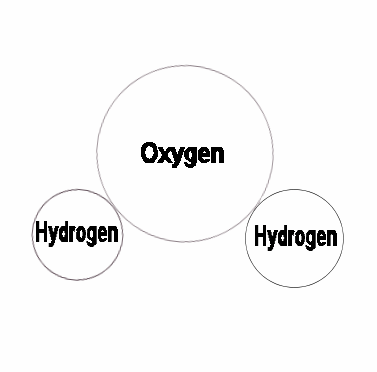
Water Molecule Structure Illustration
Negative Pole
Positive pole
Water is so unlike the two constituents it is created from that it is hard to compare them. It is like comparing apples to oranges. The scarlet beast of Revelation 17 is a little like that also, for it is made up from two main constituent parts which separately are rather unlike the beast itself when they are apart. Being together to make up the beast changes both parts so that the combination of the two are different than either one alone - and much more dangerous.
To understand how the beast formula works in Revelation 17, it is helpful to first study the leopard beast of Revelation 13. The reason this is helpful is because the Beast Formula is demonstrated in Revelation 13, something that most people never realize when they read that chapter because it is said in such a way that it is not obvious. Once this is understood, it is easier to understand the beast formula in Revelation 17.
The Beast Formula In Revelation 13
Because Revelation 13 does NOT have a phrase that says something like "here are the parts of the beast:...", the only possible way to identify the constituent parts of the beast, of which there are two of them, is through the description of the behavior of the leopard beast. Deducing the identity of the parts of the beast from how it acts can be accurately done because enough information is given to separate out the parts of the beast one from another. The beast is not a literal animal, of course, since it is symbolic of a power, but the description of the beast presented in Revelation 13 is patterned after a literal animal and interpreted using the same pattern that occurs in Daniel 7. Its body parts are used to symbolize the different stages or eras of this power, and the characteristics of the different body parts can tell you something about the behavior of the beast. The beast is a power that acts based on what it is, which is based on how it thinks. If you understand how it thinks and acts, you will be able to identify each constituent part of the beast.
Identifying the First Constituent Part of the Beast
There are several types of information presented in Revelation 13 in regards to the beast. Generally it presents information regarding the following:
- descriptions of the beast itself
- how others act toward the beast
- how the beast acts toward others
- other general information
Table 1 shows how each verse fits into each of these categories. The "X" indicates which column applies.
Verse |
Beast Description | How Others Acts Towards the Beast | How the Beast Acts Towards Others | Other General Information |
| Revelation 13:1 And I stood upon
the sand of the sea, and saw a beast rise up out of
the sea, having seven heads and ten horns, and upon
his horns ten crowns, and upon his heads the name of
blasphemy. |
X |
|||
| Revelation 13:2 And the beast which I saw was like unto a leopard, and his feet were as the feet of a bear, and his mouth as the mouth of a lion:.... | X |
|||
| Revelation 13:2 ...and the dragon gave him his power, and his seat, and great authority. | X |
|||
| Revelation 13:3 And I saw one of his heads as it were wounded to death; ... and all the world wondered after the beast. | X |
|||
| Revelation 13:3 ...and his deadly wound was healed:.... | X |
|||
| Revelation 13:4 And they worshiped the dragon which gave power unto the beast: and they worshiped the beast, saying, Who is like unto the beast? who is able to make war with him? | X |
X |
||
| Revelation 13:5 And there was given unto him a mouth speaking great things and blasphemies; .... | X |
|||
| Revelation 13:5 ...and power was given unto him to continue forty and two months. | X |
X |
||
| Revelation 13:6 And he opened his mouth in blasphemy against God, to blaspheme his name, and his tabernacle, and them that dwell in heaven. | X |
|||
| Revelation 13:7 And it was given unto him to make war with the saints, and to overcome them: and power was given him over all kindreds, and tongues, and nations. | X |
X |
||
| Revelation 13:8 And all that dwell upon the earth shall worship him, whose names are not written in the book of life of the Lamb slain from the foundation of the world. | X |
|||
| Revelation 13:9 If any man have an ear, let him hear. | X |
|||
| Revelation 13:10 He that leadeth into captivity shall go into captivity: he that killeth with the sword must be killed with the sword. Here is the patience and the faith of the saints. | X |
X |
||
| Revelation 13:18 Here is wisdom. Let him that hath understanding count the number of the beast: for it is the number of a man; and his number is Six hundred threescore and six. | X |
X |
The following verses contain several types of information, including behaviors the beast directs towards others:
Revelation 13:3 And I saw one of his heads as it were wounded to death; and his deadly wound was healed: and all the world wondered after the beast.
Revelation 13:5 And there was given unto him a mouth speaking great things and blasphemies; and power was given unto him to continue forty and two months.
Revelation 13:6 And he opened his mouth in blasphemy against God, to blaspheme his name, and his tabernacle, and them that dwell in heaven.
Revelation 13:7 And it was given unto him to make war with the saints, and to overcome them: and power was given him over all kindreds, and tongues, and nations.
The beast in Revelation 13 is described as having power to rule for 42 months, a time period that works out to 1260 prophetic days (30 days per month x 42 months = 1260 days), which represents 1260 literal years. This information only tells you how long it lasts, and virtually nothing about how it acts (except that it is tenacious), so tells you only a little about its identity. What it does tell you about its identity is this: The fact that this power continued for 1260 years indicates that this is a long running power that is great, or it would be extinguished quickly. Only a nation or a religious power could likely exist for such a long time. This narrows the search - a little. At this point, we simply know it is not some minor player on the political or religious landscape.
What behaviors are mentioned in Revelation 13:3, 5-7?
- the near deadly wound is healed, which is something that is mostly accomplished by the head itself and affects how it acts toward others, while the wound is inflicted by others and causes damage to the head itself
- he commits blasphemy
- he made war with the saints - and won this war for he overcame them
- he had power over the nations and the peoples within them
The war with the saints and having power over the nations and peoples is a power the beast is given by others, but he then uses that power so is a behavior that he engages in towards others for the duration of the 1260 days. For this reason, it is categorized as both a behavior the beast does towards others and how others behave towards the beast.
The near deadly wound is interesting because the wound is inflicted by others, yet the healing of it must, like all wounds on an animal, come from within. This predicts that somehow the wound will be healed primarily by an action of the head itself and not an action of an outside party. It heals itself. But in healing itself, it affects how it acts towards others.
Since the beast is given power to continue for a period of 1260 prophetic days (1260 literal years), it stands to reason that it is given power to do all of the behaviors mentioned above during this time period. There is a difference between the blasphemy the beast does and the power over the nations and the war against the saints of God. The difference is this. The nations must give their consent for the beast to persecute the people of God, whereas blasphemy is something that the beast does not generally need specific authorization from other powers to commit (there is an exception to this). Hence, when the 1260 days are up, the beast will no longer have power over the nations, and consequently will not have the power to continue its war against the people of God. But most of the blasphemy can and does continue because it does not need their permission to commit blasphemy.
The blasphemy of the beast continues beyond the 1260 prophetic days as indicated by the fact that the leopard-like beast of Revelation 13 has blasphemy on its heads. It appears that the body is given a separate mouth and speaks blasphemy during the 1260 days. Here is what the Bible says about this:
Revelation 13:4 And they worshiped the dragon which gave power unto the beast: and they worshiped the beast, saying, Who is like unto the beast? who is able to make war with him?
Revelation 13:5 And there was given unto him a mouth speaking great things and blasphemies; and power was given unto him to continue forty and two months.
This refers to the beast and says it was given power to speak blasphemy. Let us consider how the body of the beast is able to speak blasphemy or in what specific way does it speak blasphemy? Some suggest that the body, heads, and horns represent one power and one time period. They then suggest that the phrase "And there was given unto him a mouth" means that God gave this beast the ability to speak and that one of the heads then spoke instead of the body being given a literal mouth with which to speak. This is unlike what the Bible says happens when God wants an animal to speak. We have the case of Balaam, in which it was NOT said that the donkey was given a mouth to speak, but rather his mouth (the one he already had) was opened so that he could speak. There is a difference here. Examine for yourself what the Bible said about the situation with Balaam and his donkey:
Numbers 22:28 And the LORD opened the mouth of the ass, and she said unto Balaam, What have I done unto thee, that thou hast smitten me these three times?
Thus, the Bible says that God opened the donkey's mouth, not that it was given a mouth with which to speak like is done in Revelation 13. The leopard-like beast of Revelation 13 already had at least one mouth on one of the heads that looked like a lion's mouth, and it is probable that it actually had seven mouths, one on each of the seven heads. So, to say that it is given a mouth to speak seems extremely unnecessary when God could easily have said that he opened one of the mouths to speak, just like he did for the donkey of Balaam. Why say that a mouth was given it under these conditions?
But, on this web site, we believe that the body represents the first era, the heads the second era, and the horns the last era, just as is done in Daniel 7 and also in Revelation 17, so it makes sense that God said this beast was given a mouth to speak The body of the beast needed to have a mouth given to it in order to be able to speak because the body does not naturally have a mouth and the heads represent a time that has NOT YET COME, and they therefore cannot speak. Thus, the body MUST have a mouth given to it so it can speak.
Just to be more sure of the language and its intended meaning, here is another example where the Bible refers to the mouth being opened, which means the person began to speak:
Job 3:1 After this opened Job his mouth, and cursed his day.
Therefore, like the donkey whose mouth was opened and it began to speak, Job's mouth is said to have opened and then he began to speak. There are other examples in the Bible where this same type of wording is used, including in the New Testament (for example, Luke 1:64). Considering the way the wording is done in the remaining portions of the Bible when someone opens their mouth to speak, it seems very odd that given the wording of Revelation 13:5, this should refer to one of the mouths on the heads being opened to speak.
This Revelation 13 leopard beast (also often referred to as the sea beast), as described below, is the same power as the scarlet beast of Revelation 17. It speaks blasphemy during the time of the body, and it will still have this characteristic during the time of the head. During the time of the ten horns, the power represented by the body will return and will continue on in its blasphemous ways, just as before until Jesus comes again. Thus, the blasphemy is not limited to the 1260 days.
Notice that the ten horns are NOT marked with blasphemy in Revelation 13. There is a reason for this having to do with the identity of the ten horns, which changes slightly from that of the original beast, but originates from it. The fact that the horns do NOT have blasphemy on them is an evidence that the pattern of this beast is consistent with that of the beasts of Daniel 7 (the body comes first, then the heads, and finally the horns). If this beast were representative of one time period (rather than three eras of this power), then the blasphemy should also be shown on the horns. Think about this.
The war against the saints and the power over the nations are the powers the beast was given only for the 1260 days, unlike the other powers which continued past the 1260 days.
Blasphemy Is a Key Identifying Element Of One Part of the Beast
Blasphemy is a key element in identification of one of the two parts of the leopard-like beast of Revelation 13. The reason this is true is because it is a behavior of the beast's body itself. Behavior always reveals a lot about a person or an organization and the beast is no exception to that.
To understand how blasphemy reveals the identity of one part of the beast, one must consider what blasphemy really means. To do that, normally we would simply look it up in the dictionary, but first we must check the Bible to see if it has its own definition of blasphemy. Do not forget that the Bible often gives us a "working definition" of words it uses. A working definition is one in which an author temporarily redefines a word in some practical way to suit his own purposes, rather than strictly following the dictionary definition. In this way, the Bible defines things for us in the way that God wants us to understand them. This is particularly true of the symbols used in prophecy such as Daniel and Revelation.
For an example of this being done in the Bible, in Revelation 1 John tells us that he saw seven golden candlesticks. Now if a person looks up the definition of candlesticks in the dictionary, he will find the standard definition of that word as we understand it, a concept that has probably not changed much in the 1900 years or so since Revelation was written. God provides a "working definition" of candlesticks in Revelation 1 when He tells us that the seven golden candlesticks are symbolic of the seven churches (Revelation 1:20). Through this example, He makes it plain that a dictionary definition won't work for it has nothing whatsoever to do with the symbolic meaning. He also sends a strong signal that the book of Revelation is a book that is based on symbolism, something that we absolutely must not miss or we'll never understand it. Therefore, the logical conclusion is that we must let the Bible define things for us wherever possible.
Another example where this is done in Revelation is the word abyss, or what some translations call the bottomless pit. The bible provides its own definition of it, though it also alludes to the dictionary definition of it in how it is used in Revelation 9. The Bible's symbolic definition of it is found in these two verses:
Revelation 20:3 And cast him into the bottomless pit, and shut him up, and set a seal upon him, that he should deceive the nations no more, till the thousand years should be fulfilled: and after that he must be loosed a little season.
Revelation 20:7 And when the thousand years are expired, Satan shall be loosed out of his prison,
Did you catch the significance of these two verses? The significance is that the bottomless pit (the abyss) is a PRISON! But what do most people do? They run for their Greek-English dictionary and look up the Greek word that is translated as a bottomless pit, and then will tell you it is a deep bottomless pit or maybe a waste place - a desert, or something on that order. What does that tell you? Does it tell you, as Revelation 20 does, that it is a prison? No. But the Bible does. And if you miss this, you will miss the meaning of the abyss entirely. It reinforces that idea in Revelation 9, for it describes it this way:
Revelation 9:1 And the fifth angel sounded, and I saw a star fall from heaven unto the earth: and to him was given the key of the bottomless pit.
Revelation 9:2 And he opened the bottomless pit; and there arose a smoke out of the pit, as the smoke of a great furnace; and the sun and the air were darkened by reason of the smoke of the pit.
This clearly tells you that the bottomless pit has a door opening into it and this door is locked until a key is used to unlock it. If you read further, it tells you that when the door was opened in this vision (do remember that this is just one time that it is opened, for there are other times it is apparently opened to allow other powers out), smoke comes out of it, and out of that grasshoppers come out. Reasonably, the grasshoppers probably were in the smoke that arose out of the pit, though we are not told that, but they certainly arise out of the smoke.
The grasshoppers represent the Saracen Muslim fighters who lived in the time of and shortly after the time of the Islamic prophet Mohammed. They were a power that was held in "prison" until it was time to release them, at which time the "door" of the bottomless pit was unlocked and opened to let them out. After this they became a plague upon the Christian world to punish it for the sins it had committed against God and the true followers of God. The grasshoppers represented a power, just like the beasts of Daniel, but in their case they also represent the huge numbers of the Saracens that invaded Christian territories. Thus, any power that is held in check until God releases it can be said to be in prison, or in the abyss, until its release. Likewise, any power that exists freely and is then placed into restraint, can be said to have gone into prison or the abyss. Do remember that we do have a clear example of the devil being sent into prison in Revelation 20. The lesson taught by the grasshoppers is that the dragon is not the only power that can be held in the abyss and come out of it.
It is important to reiterate that the abyss is a bottomless pit with a door that is normally locked until it is opened. This is evidenced by the fact that God gave the star (which represents Satan) the key to open the pit and a power came out when the door was opened. Historically, many powers have arisen through various means so it would appear that God gives Satan the key to the bottomless pit periodically to do this. The key is "permission" to open the pit and allow a power out to do the work that they will do, such as warfare, conquest and causing havoc whenever God permits.
The presence of a door on the abyss that is normally locked is a good description of a prison. The author has an older brother that used to be a teacher to prisoners in a jail (he only worked there - he did NOT live there!). He will certainly tell you that the doors of a prison are normally locked to hold in the prisoners. But if you stick with the dictionary definition for the abyss and fail to catch the redefinition of the word as a prison in Revelation 9 and 20, you will entirely miss the point of the abyss or bottomless pit. So, it is important to consider how God redefines words in the Bible. The results will be a lot better as far as our understanding of what God is trying to teach us.
Now, back to the word blasphemy. Just so you are clear on this, the author will show what the dictionary says about the word blasphemy. The dictionary gives the meaning of blasphemy as defined by common usage in modern times, which is not exactly the same as the Bible definition, though it is close. Here is what the dictionary says about blasphemy (from Merriam-Webster's Collegiate Dictionary - computer version):
1 a : the act of insulting or showing contempt or lack of reverence for God b : the act of claiming the attributes of deity
2 : irreverence toward something considered sacred or inviolable
In Bible times, the word blasphemy had its root meaning in the idea of scorn, which we might think of as contempt for God. The Bible gives us very good, practical working definitions of blasphemy, which in many respects, sums up the meaning of blasphemy as used almost anywhere in the Bible. The Bible definitions of blasphemy are more extensive than the dictionary definition, a difference that is important.
Bible Definitions of Blasphemy
For a list of all Bible verses containing the word blasphemy or variants of it that occur in the Bible, click here. Click the Back button on your browser to return to this location after you have looked over the verses.
Let us learn how the Bible itself defines blasphemy by considering the following texts (this list may not be complete but should cover most Bible definitions):
- The Jews revealed one definition of blasphemy through an incident recorded in Matthew 26:
- Next, the Jews revealed what is probably the second most
important definition of blasphemy:
Matthew 9:1 And he [Jesus] entered into a ship, and passed over, and came into his own city.
Matthew 9:2 And, behold, they brought to him a man sick of the palsy, lying on a bed: and Jesus seeing their faith said unto the sick of the palsy; Son, be of good cheer; thy sins be forgiven thee.
Matthew 9:3 And, behold, certain of the scribes said within themselves, This man blasphemeth.
Matthew 9:4 And Jesus knowing their thoughts said, Wherefore think ye evil in your hearts?
Matthew 9:5 For whether is easier, to say, Thy sins be forgiven thee; or to say, Arise, and walk?
Matthew 9:6 But that ye may know that the Son of man hath power on earth to forgive sins, (then saith he to the sick of the palsy,) Arise, take up thy bed, and go unto thine house.
Matthew 9:7 And he arose, and departed to his house.
Matthew 9:8 But when the multitudes saw it, they marveled, and glorified God, which had given such power unto men.The verses above give another definition of blasphemy, which is claiming the power to forgive sins. In the Bible, this refers ONLY to forgiveness for sins against God's laws, so cannot refer to "sins" against man because of breaking his laws or the laws of a false god.
Likely this is the second most important definition of blasphemy, for it is central to the salvation of man.
- Here are verses which give another
Bible definition of blasphemy:
Matthew 12:31 Wherefore I say unto you, All manner of sin and blasphemy shall be forgiven unto men: but the blasphemy against the Holy Ghost shall not be forgiven unto men.
Mark 3:29 But he that shall blaspheme against the Holy Ghost hath never forgiveness, but is in danger of eternal damnation:
This form of blasphemy is refusal to repent of sins, so is said to be committed by a person against the Holy Spirit. There is no forgiveness because there is normally never repentance of this type of sin. But there can be, so that is why the person is said to be "in danger of eternal damnation", which implies that it is something that can be reversed. The clue to unlocking the understanding of this is the phrase "hath never forgiveness". This indicates that as long as the person never has forgiveness, then he remains "in danger of eternal damnation". With repentance, there is forgiveness so the person should no longer be "in danger of eternal damnation". Hopefully, this makes sense to you.
This can be considered a form of claiming to be God because it is a person saying that they have no need of submitting to God's will in their life so long as they persist in this. Only a being equal to God, or one choosing to believe he is equal to God by choice of actions or by belief, will make such a claim. But do understand it is important not to simplify this by categorizing it that way, for the Bible does not do this. Thus, though it might be claiming to be God, we are to leave it as blasphemy against the Holy Spirit and understand it and use it as a separate category of blasphemy.
-
Blasphemy apparently can also be committed against men, according to the Bible. Here is one such verse:
1 Kings 21:10 And set two men, sons of Belial, before him, to bear witness against him, saying, Thou didst blaspheme God and the king. And then carry him out, and stone him, that he may die.
This probably is based on the basic definition of blasphemy, which is that it is scorning the authority in charge.
Some versions render the Hebrew word as "curse" or "cursed" rather than "blaspheme". In this case, either is correct according to Strong's Hebrew and Greek Dictionary. The context would strongly suggest that it is indeed possible to blaspheme the king, just as it is possible to blaspheme the mountains of Israel as recorded in Ezekiel 35:12 and explained below. This also makes it clear that some forms of cursing is blasphemy, though it is not at all clear that all forms are blasphemy.
- The Bible says that idolatry is also blasphemy against
God. Here is the evidence for that:
Ezekiel 20:27 Therefore, son of man, speak unto the house of Israel, and say unto them, Thus saith the Lord GOD; Yet in this your fathers have blasphemed me, in that they have committed a trespass against me.
Ezekiel 20:28 For when I had brought them into the land, for the which I lifted up mine hand to give it to them, then they saw every high hill, and all the thick trees, and they offered there their sacrifices, and there they presented the provocation of their offering: there also they made their sweet savor, and poured out there their drink offerings.
What is described here were practices associated with the worship of idols. Elsewhere, God seems to indicate that not all of these practices are blasphemy in and of themselves, so it appears that the core issue here is the actual practice of idol worship or worship of someone other than the true God. It seems that here people make themselves out to be God for they obviously ignore God's plain commands not to worship idols or engage in idolatrous practices as described in these verses above. But at the same time, they set up another as a god, in this case, objects made of silver, gold, and wood in the form of idols. So, making a god out of another person or object by worship of them or praying to them can constitute blasphemy. Since praying is something that a person should direct only to God because it is an act of worship, this is the reason it constitutes blasphemy when directed to someone other than God.
-
Below is evidence that some practices associated with idol worship themselves do not always constitute blasphemy but are categorized separately:
Isaiah 65:7 Your iniquities, and the iniquities of your fathers together, saith the LORD, which have burned incense upon the mountains, and blasphemed me upon the hills: therefore will I measure their former work into their bosom.
Here burning incense, which was associated with idol worship, was classified separately from blasphemy which the Israelites did upon the mountains. The mountains are where they went to worship their pagan gods. Pagan gods were commonly believed to live in specific places, and mountains were a common place that gods were believed to reside. Consequently, their gods were associated with the mountains. The blasphemy spoken of in Ezekiel 20:27-28 MUST refer to the act of worship itself.
-
The word of God could also be blasphemed. Here is the evidence of that:
Titus 2:5 To be discreet, chaste, keepers at home, good, obedient to their own husbands, that the word of God be not blasphemed.
It appears that this is scorn for the word of God, but ultimately it probably is counted by God as claiming to be God, for a person who ignores God's word is saying that he has no need to submit to God. This does not appear to be blasphemy in the form of claming to be able to forgive sins against the laws of God (meaning there is the promise of eternal life behind such forgiveness), it is not blasphemy against men, and it is not likely idolatry (except for idolatry of the self), so claiming to be God is probably the meaning of this. Yet we cannot be sure because the Bible does not say that, so we probably should classify this as another category of blasphemy, just as we did with the blasphemy against the Holy Spirit.
-
Even the mountains of Israel were said to be blasphemed against, which seems very strange indeed. Here is the evidence of that:
Ezekiel 35:12 And thou shalt know that I am the LORD, and that I have heard all thy blasphemies which thou hast spoken against the mountains of Israel, saying, They are laid desolate, they are given us to consume.
The explanation of this is given later in the section dealing with blasphemy against those who live in heaven.
-
Hypocrisy can be another form of blasphemy. Here is the evidence for that:
Revelation 2:9 I know thy works, and tribulation, and poverty, (but thou art rich) and I know the blasphemy of them which say they are Jews, and are not, but are the synagogue of Satan.
Clearly these individuals make a pretense of being one thing while God says their hearts are really elsewhere. The modern day word for that is hypocrisy, but God calls it blasphemy. It seems reasonable that this is true only in relation to a person's commitment to God or to false gods and the common forms of hypocrisy that all encounter in daily life are not likely the subject matter which God labels as blasphemy. But one does need to be aware of this.
Matthew 26:63 But Jesus held his peace. And the high priest answered and said unto him, I adjure thee by the living God, that thou tell us whether thou be the Christ, the Son of God.
Matthew 26:64 Jesus saith unto him, Thou hast said: nevertheless I say unto you, Hereafter shall ye see the Son of man sitting on the right hand of power, and coming in the clouds of heaven.
Matthew 26:65 Then the high priest rent his clothes, saying, He hath spoken blasphemy; what further need have we of witnesses? behold, now ye have heard his blasphemy.
Matthew 26:66 What think ye? They answered and said, He is guilty of death.
Here Jesus was said to have committed blasphemy by claiming to be God. This is probably the most important definition of blasphemy in the whole Bible.
What Forms of Blasphemy Did the Beast Commit?
and More Bible Definitions of Blasphemy
It is true that speaking against God can constitute blasphemy, for the Bible makes that plain in the following verse:
Leviticus 24:16 And he that blasphemeth the name of the LORD, he shall surely be put to death, and all the congregation shall certainly stone him: as well the stranger, as he that is born in the land, when he blasphemeth the name of the LORD, shall be put to death.
But this must be understood to be a specific type of speech in Bible prophecy. Note the distinction made between speaking "great things" and blasphemy, for it says the following:
Revelation 13:5 And there was given unto him a mouth speaking great things and blasphemies; and power was given unto him to continue forty and two months.
Here is another example where Bible makes a distinction between "great things" or "great words" and the "blasphemies", for it says the following
Daniel 7:25 And he shall speak great words against the most High, and shall wear out the saints of the most High, and think to change times and laws: and they shall be given into his hand until a time and times and the dividing of time.
The logical conclusion is that "great things" or "great words" against God are not necessarily the same as blasphemy. Therefore, we must look to other behaviors of the Talking Horn on the fourth beast of Daniel 7 to find the blasphemy that it commits.
This certainly is interesting because the author has encountered other authors who thought the "great things" of Daniel 7 is blasphemy, but the Bible does show that there is a difference between the "great things" and blasphemy.
The Talking Horn of Daniel 7 on the fourth beast is the same power as the leopard beast of Revelation 13 for it arises at the same time, does the same things, and has power for the same length of time. As is said, if it walks like a duck and talks like a duck, it probably is a duck. Therefore, we can look for parallels in their behaviors.
Daniel 7:25 (the fourth beast of Daniel 7) and Revelation 13:5 (the leopard beast) parallel each other. Here is the parallel structure:
Verse Division |
Revelation
13:5 |
Daniel 7:25 |
| Great Things or Great Words | And there was given unto him a mouth speaking great things | And he shall speak great words against the most High, |
| Blasphemy or specifics of blasphemy | ...and blasphemies; | ...and shall wear out the saints of the most High, and think to change times and laws: and they shall be given into his hand |
| Length of Existence | ...and power was given unto him to continue forty and two months. (1260 literal years) | ...until a time and times and the dividing of time. (1260 literal years) |
Do you see the parallel construction of these two verses? These verses are talking about the same things. And it makes it clear that God makes a distinction between the "great things" (or "great words") spoken against God and blasphemy, at least for purposes of marking a beast with blasphemy. What is called blasphemies in Revelation 13:5 is called "...and shall wear out the saints of the most High, and think to change times and laws: and they shall be given into his hand" in Daniel 7:25. The last phrase in both verses simply gives how long this power would last.
What exactly constitutes the blasphemy defined in Daniel 7:25 when it says "...and shall wear out the saints of the most High, and think to change times and laws: and they shall be given into his hand"? This is an important question. History provides the answer to this question because both the Beast Power and the Talking Horn (In case you are wondering what this is, it is my "pet name" for the horn on top of the fourth beast of Daniel 7 that talks) as presented in the Bible actually show a description of the same power even though they look different one from another. Typically, to answer this question, people look to history in relation to Daniel 7, and while the author believes such an approach to be of value and will use some of the material from Daniel 7 for this purpose, the author also believes that Revelation 13:6 can provide us with substantial answers to this question, so will rely primarily on this for answering this question. Revelation 13:6 very specifically tells you precisely what this power does that God considers to be blasphemy, so is quite useful. Since both verses are about the same power, it is a valid approach to do this. In addition, for a power to be marked with blasphemy, it must meet certain requirements. Not just any act of blasphemy will do for God to mark a beast with blasphemy.
The specific things spoken of by Revelation 13:6 as blasphemy are:
- blaspheme God's name
- blaspheme God's tabernacle
- blaspheme them that dwell in heaven
Blasphemy Against God's Name - What Does It Mean?
What does it mean to blaspheme the name of God? The Bible demonstrates that God associates His name with His character. These verses below should help you begin the process of gaining understanding that God's name is associated with His character. Then you can understand exactly how blasphemy against God's name means damaging His character.
Psalms 74:10 O God, how long shall the adversary reproach? shall the enemy blaspheme thy name forever?
Romans 2:24 For the name of God is blasphemed among the Gentiles through you, as it is written.
Exodus 33:17 And the LORD said unto Moses, I will do this thing also that thou hast spoken: for thou hast found grace in my sight, and I know thee by name.
Exodus 33:18 And he said, I beseech thee, show me thy glory.
Exodus 33:19 And he said, I will make all my goodness pass before thee, and I will proclaim the name of the LORD before thee; and will be gracious to whom I will be gracious, and will show mercy on whom I will show mercy.
Exodus 33:17-19 make it clear that
God associates his name with His characteristics, or you
could say it is associated with his character. He does
this by saying that He would make all His goodness pass
before Moses AND "proclaim the name of the
LORD". For this reason, it is that Psalms
74:10 equates blasphemy with reproaching the name of God
for it is an act of damaging His character and reputation.
But there is more. Moses was instructed by God to prepare two tables of stone upon which God planned to write the 10 commandments. Moses was to take the tables of stone with him and go up on the mountain where God planned to meet with him and show Himself to Moses. The verses below record what happened:
Exodus 34:5 And the LORD descended in the cloud, and stood with him there, and proclaimed the name of the LORD.
Exodus 34:6 And the LORD passed by before him, and proclaimed, The LORD, The LORD God, merciful and gracious, longsuffering, and abundant in goodness and truth,
Exodus 34:7 Keeping mercy for thousands, forgiving iniquity and transgression and sin, and that will by no means clear the guilty; visiting the iniquity of the fathers upon the children, and upon the children's children, unto the third and to the fourth generation.
Exodus 34:8 And Moses made haste, and bowed his head toward the earth, and worshiped.
Exodus 34:5 says that God proclaimed the name of the Lord. Then the events proceeded as recorded in Exodus 34:-6-8, which should tell us that all the things that follow are associated with the name of the Lord.
When God proclaimed His name, what did He do? Here is a detailed list:
- He passed by Moses
- He stated His title or name, The Lord, the Lord God
- Then He began to list His character traits (question: why did He do this?):
- merciful and gracious
- longsuffering
- abundant in goodness and truth
- Keeping mercy for thousands
- forgiving iniquity and transgression and sin,
- and that will by no means clear the guilty
- visiting the iniquity of the fathers upon the children, and upon the children's children, unto the third and to the fourth generation.
These characteristics can be divided into positive and negative characteristics, at least as we perceive them.
These verses become very specific about exactly what characteristics are found in the character of God, which God Himself associates with His name. As you look over the list above, it should become clear that several things are evident in the description of God. These are:
- His mercy, goodness, and kindness are apparently emphasized by their number and by being listed first. These can be described in specific terms in the ten commandments. For evidence that this is so, consider that God is not a thief, He does not lie, He does not commit adultery with your wife or husband (unlike legends of some gods from some cultures around the world), He is not a coveter of your things so He won't murder you to get your BMW or other valuable possessions (if you have any). By not doing these things and making love for His neighbor the basis of His behavior towards us, God is therefore described as having mercy, kindness, and goodness. Clearly, we can rightfully say that His character of mercy, kindness, and goodness is described in the ten commandments. These are all positive attributes of God.
- God is very willing to forgive, another positive attribute of God
- and yet for the guilty, a negative trait as we perceive it: the sins of one generation will follow on down to several generations of their descendants
- The positive and negative traits clearly imply that it
is God's right to decide upon
- forgiveness for sins
- bring judgment for sin
- determine our ultimate destiny, heaven and eternal life or hell and eternal death
Now, what does it mean then to blaspheme the name of God? It means to reproach the name of God and slander His character. Since the character of God is associated with His name, it stands to reason that if one reproaches the name of God, one is reproaching the character of God. God takes His reputation seriously and does not appreciate having it damaged by careless words, so it seems likely that He is insulted by such acts. To reproach the name of God is to take upon oneself the prerogatives that clearly belong to God alone, for one is clearly saying that a person need not worry about the consequences of such behavior. This implies that a person (or power) evidently considers oneself of more importance than God. He can safely be ignored in their thinking. This makes them into a god, consciously or unconsciously.
Question: Because the law of God describes His character, how do you commit blasphemy in relation to the law of God? Answer: By claiming to be able to change it at will! This is blaspheming the name of God because a power doing this is claiming they are a god in their own right and don't need to answer to the true God. This happens because the power believes they are an equal to God. It damages God's character because it alters His law, which is a description of what He is like. If one law can be changed, then any of them can be changed. This means that if a power wants to and claims the power to change God's laws, murder could become legal under God's law. Do you want that? Do you want theft to become legal? Think about this when you hear certain religious powers proclaim that they have changed some of God's law. They are proclaiming that they have the right to change ANY of God's laws. Do you really believe that God would given them such power when God says the following about Himself?
Malachi 3:6 For I am the LORD, I change not; therefore ye sons of Jacob are not consumed
Another right God declares for Himself in His speech to Moses is the right to forgive sins. This is declared in Exodus 34:7, for it says that it is God who forgives sins. Remember that when God forgives sins, there is the implicit promise of eternal life connected with it, which no other being or any other so-called god can genuinely promise. Since this forgiveness of sins is associated with the proclamation of the name of the Lord, clearly one can blaspheme the name of God by claiming that one can forgive sins against God's laws. Nobody but God can absolve a person of their sins and genuinely promise them eternal life as a result!
Another right God declares in the proclamation of the name of the Lord is the right to render judgment for sin. Therefore, if a power claims to be able to decide who goes to heaven and who does not on the basis of perceived sins (such as being labeled a "heretic"), they are committing blasphemy against God. This last right is rather scary because how many of us have said that because of the behavior of certain people, they certainly are deserving of eternal loss in hell (have you ever told someone "GO TO HELL!!!")? We are in danger by such statements, though I am sure all people make similar statements at one time or another. We do need to be very careful about that. While it is true that we need to make judgments about people's behaviors and have to make some estimate of their motives sometimes, we need to be very careful about declarations of their motives and destiny in regards to that. This is a difficult area for all, especially when injustice has been done against us. But if we are not careful about such statements, we can be guilty of blasphemy.
It is also true that God Himself has made declarations about the probable destiny of individuals who continue to persist in committing certain evil acts. The warning is that they are at risk of hell, and usually not that they are definitely going there. Of course, if they don't repent, then the risk can become reality. We can know that they are in danger of hell because of God's own statements about such sins, but we must be absolutely certain that such statements are plainly laid out in the Bible and not based on some church leader's proclamations or tradition, which will never hold up in God's courts of law. All things will be brought into judgment by God, whether good or bad so we need to be very careful that we follow exactly what God has laid out in His word. We will be safe that way.
There is one place where there is a clear exception to the destiny question, and that is at the end of time during the time when the investigative judgment of God is done and over with. When Jesus finishes the judgment, He will make the following terrible pronouncement:
Revelation 22:11 He that is unjust, let him be unjust still: and he which is filthy, let him be filthy still: and he that is righteous, let him be righteous still: and he that is holy, let him be holy still.
Immediately after that, the temple in heaven fills with smoke from God and nothing can enter it during the seven last plagues. This means that during this time, there is no forgiveness of sins and can never be again. The destiny of everyone will have been sealed forever. The people of God will know this about those who have chosen sin as their way of life.
In summary, the following things define blasphemy against the name of God:
- claiming to be God
- claiming to be able to forgive sins against God's laws, which carries the imilicit promise of eternal life with it
- claiming the right to bring judgment against people for sin against God's laws (this relates to destiny)
- claiming to be able to determine a person's ultimate destiny, or in other words, having the right to decide who goes to heaven and who does not
- claiming to be able to change the law of God at will, which damages the reputation of God's character
Blasphemy Against God's Tabernacle - What Does It Mean?
The earthly sanctuary in the Old Testament was used for the purpose of dealing with sin. In other words, God made His presence visible there in the Most Holy Place of the sanctuary and if you wanted to have your sins forgiven, you came to God through a priest at the sanctuary for that purpose. Logically, to blaspheme the tabernacle means that a person or power must be usurping the power belonging to God in connection with the tabernacle.
There were several specific powers of God manifested at the sanctuary (perhaps the reader can think of others?) These were:
- manifesting the presence of God among His people
- forgiving sins
- accepting the mediatorial work of the priest for sins, which represented the work of Jesus as our high priest after the cross
- determining judgment of guilt or innocence of an accused person through through the Urim and Thummin stones on the high priests garments. This usually amounted to exercising the power to bring judgment against people for sin and to determine their destiny.
The most important power God exercised at the tabernacle for the average person was the power to forgive sins, which carries with it the promise of eternal life. That is not to deny or reduce the importance of the other powers, but it is a fact that the average person went to the tabernacle for this very purpose and probably did not think much about the other powers. If they were directly involved as an accused person who was brought before the high priest, then they might have worried a great deal about the fact that God genuinely knew their innocence or guilt and would definitely reveal the truth for all to see. But for most people visiting the tabernacle, all they wanted was for their sins to be forgiven so that they would not die in the fires of hell someday and would inherit eternal life. So, one meaning of blasphemy against the tabernacle of God in heaven means this power claims to have the authority to forgive sins against God's laws.
The second power of God manifested at the tabernacle was simply to manifest His presence. He manifested Himself as the glory that appeared above the mercy seat and during the travels from Egypt to Israel, He also manifested Himself in the cloud that led them on their journey, provided shade during hot days, light by night, and other functions, most of which was done either in or near the tabernacle. This told the people that He was or was not with them AND it told them that He was God. He existed. He was real. He had real power and He cared about them. Blasphemy against the tabernacle then in this case is for a power to substitute itself for God, claiming to be God, for the presence of God was manifested at the tabernacle. Perhaps it does as the Bible says about a certain power that it would do the following:
2 Thessalonians 2:4 Who opposeth and exalteth himself above all that is called God, or that is worshiped; so that he as God sitteth in the temple of God, showing himself that he is God.
We will get around to identifying this power later on, but meanwhile, such a power assumes that it can safely ignore the consequences of claiming to be God when it is not.
Blasphemy against the tabernacle is another way of saying that God's tabernacle perhaps is not really needed. This power is sufficient in and of itself to substitute for that function.
Blasphemy against God's tabernacle can also mean this power claims to be able to substitute its own mediation between God and man. This is so because it is obvious that by blaspheming the tabernacle of God, this power believes it has a better form of mediation than God provides. In the earthly sanctuary of the Jewish people, the sanctuary was the place where the priests would officiate between God and other men to provide forgiveness of sins through the sacrifice of animals. In addition, once a year the final forgiveness and disposal of these sins was carried out by the day of atonement services, which the high priest was to do. It appears that this power believes that after the cross, the same type of mediation is still necessary, so provides this for its believers. Of course, they need to leave off the animal sacrifices, but still provide mediators to absolve their believers of their sins.
In the heavenly sanctuary, Christ provides the sacrifice through His own sacrifice on the cross that is already done, and through this, He is able to obtain forgiveness of sins. No other person can do this because only Jesus died for the sins of others and only Jesus can appear in the personal presence of God to obtain forgiveness, something that is required. This substitution of another mediator is invalid, according to God, because he says the following about this subject:
1Timothy 2:5 For there is one God, and one mediator between God and men, the man Christ Jesus;
There is only one priest who stands at the right hand of God and that priest is Jesus. No other can substitute for only He stands in the personal presence of God, which is the only place where forgiveness can be obtained. It cannot be obtained any other way for only Jesus can personally go before the Father and tell Him that His death is to be substituted for the sinners death and His blood for the sinner's blood. No earthly priest can substitute for that ever since the death of Jesus. Remember that the Bible says that the earthly sanctuary system of services was done away with at the cross, and that includes the mediation provided by the priests. For evidence of this, remember that the curtain in the sanctuary was torn at the death of Jesus (Matthew 27:51), indicating that the earthly sanctuary services were over and done with and that the way to God was no longer through a priestly mediatorial service here on earth. Instead, a much better one is obtainable through prayer to God through Christ (Hebrews 4:16).
There are those who claim that based on the original Greek, 1 Timothy 2:5 does not exclude other mediators. If this is true, then there should be evidence in the Bible of additional mediators officiating AFTER the death of Jesus, for this is when 1 Timothy 2:5 applies. But a search of the Bible will show that Jesus is the only mediator between God and man after His death. Here are several such verses that refer to the mediation of Jesus:
Hebrews 8:6 But now hath he obtained a more excellent ministry, by how much also he is the mediator of a better covenant, which was established upon better promises.
Hebrews 9:14 How much more shall the blood of Christ, who through the eternal Spirit offered himself without spot to God, purge your conscience from dead works to serve the living God?
Hebrews 9:15 And for this cause he is the mediator of the new testament, that by means of death, for the redemption of the transgressions that were under the first testament, they which are called might receive the promise of eternal inheritance.
Hebrews 9:16 For where a testament is, there must also of necessity be the death of the testator.
Hebrews 9:17 For a testament is of force after men are dead: otherwise it is of no strength at all while the testator liveth.
Hebrews 9:18 Whereupon neither the first testament was dedicated without blood.
Hebrews 9:19 For when Moses had spoken every precept to all the people according to the law, he took the blood of calves and of goats, with water, and scarlet wool, and hyssop, and sprinkled both the book, and all the people,
Hebrews 9:20 Saying, This is the blood of the testament which God hath enjoined unto you.
Hebrews 9:21 Moreover he sprinkled with blood both the tabernacle, and all the vessels of the ministry.
Hebrews 9:22 And almost all things are by the law purged with blood; and without shedding of blood is no remission.
Hebrews 9:23 It was therefore necessary that the patterns of things in the heavens should be purified with these; but the heavenly things themselves with better sacrifices than these.
Hebrews 9:24 For Christ is not entered into the holy places made with hands, which are the figures of the true; but into heaven itself, now to appear in the presence of God for us:
Hebrews 9:25 Nor yet that he should offer himself often, as the high priest entereth into the holy place every year with blood of others;
Hebrews 9:26 For then must he often have suffered since the foundation of the world: but now once in the end of the world hath he appeared to put away sin by the sacrifice of himself.
Hebrews 9:27 And as it is appointed unto men once to die, but after this the judgment:
Hebrews 9:28 So Christ was once offered to bear the sins of many; and unto them that look for him shall he appear the second time without sin unto salvation.Hebrews 12:24 And to Jesus the mediator of the new covenant, and to the blood of sprinkling, that speaketh better things than that of Abel.
The point of the matter of these verses is that Jesus is spoken of as the mediator and nobody else. Just because a church may point to their officials and claim this is evidence that such mediation supposedly takes place does NOT mean it is acceptable to God.
The Bible also gives evidence that the mediator must appear directly in the presence of God to do the mediation. This is taught also by the Old Testament Sanctuary services (which is a model of what was to happen when Jesus becomes our high priest after His death) when the high priest once a year went into the Most Holy Place to do the atonement. That service plainly teaches that the final forgiveness of sins was not obtained until the high priest went into the direct and personal presence of God and did the atonement. In the atonement, blood was placed on the mercy seat between the visible presence of God AND the law of God. Thus, there can be no mediator except for through the person of the one individual who appears in our behalf in the personal and direct presence of God in heaven as our high priest, and that person can only be Jesus because only He died for our sins and only He has been appointed as our high priest. No saints can do this because they did not and cannot die for our sins AND they are not appointed to such a task.
Another power that God exercised at the sanctuary was as a judge. Here is the evidence for that:
Exodus 28:30 And thou shalt put in the breastplate of judgment the Urim and the Thummim; and they shall be upon Aaron's heart, when he goeth in before the LORD: and Aaron shall bear the judgment of the children of Israel upon his heart before the LORD continually.
Numbers 27:21 And he shall stand before Eleazar the priest, who shall ask counsel for him after the judgment of Urim before the LORD: at his word shall they go out, and at his word they shall come in, both he, and all the children of Israel with him, even all the congregation.
The Urim and Thummin were special stones that were worn on the breastplate of the high priest that God used in some way to indicate a decision (the author has heard that traditionally it lighted up to indicate a decision). This probably included many different types of decisions, such as whether or when to go to war against a troublesome neighbor, what to plant, decisions about criminals, and so on. The latter is what is most significant for it was the power to bring judgment against a person and decide their destiny in light of the findings of the judge (God). This had to be scary for any guilty criminal, but would have been most comforting to those who knew they were genuinely innocent, for they knew that God would find them guiltless and set them free. They knew they could trust God to do this because they knew God would not lie, he would know all the facts, and render the correct judgment.
There is an important lesson in this because an innocent person knew he could trust the outcome because of the kind of person he knew God to be. Perhaps that is something that we need to remember in our quest for salvation. God has promised that if we accept Jesus and follow Him, Jesus will substitute for us and we will be found innocent because Jesus is innocent of sin. We need to trust that this is indeed true, that God is the kind of person who keeps His word.
But the important point for this study is that God here exercised the power to bring judgment against a person for sin and decide their destiny.
In summary, blaspheming the tabernacle of God means this power claims the following:
- to be God
- to be able to forgive sins against God's laws
- accepting the mediatorial work of earthly priests for sins, which substitutes for the work of Jesus as our high priest after the cross
- determining judgment of guilt or innocence of an accused person through through the Urim and Thummin stones on the high priests garments. This is having the power to bring judgment against people for sin and to determine their destiny.
Blasphemy Against Them That Dwell In Heaven - What Does It Mean?
This particular phrase is a curious thing. Those that dwell in heaven is a phrase that at first glance appears to refer only to those who live in heaven. It appears that it is not specifically referring to God, so who could they be? The following are possible:
- Jesus and the Holy Spirit
- Angels who live in heaven
- Believers who were probably taken to heaven after resurrection at the death of Jesus (Matthew 27:51-53). The Bible does not tell us that they went to heaven, but they were resurrected, and it seems likely they did not remain on earth long. This happened as a result of the death of Jesus, which suggests that this was a resurrection to eternal life for these people for His death would make such a thing possible.
- Believers (the designated saints from earth) who are believed by some to be in heaven (the author is not agreeing that these "saints" are in heaven, only pointing out that some believe they are there)
- Believers on earth who will someday be in heaven
- Enoch, Elijah, and Moses. It is Biblically provable that Enoch and Elijah are in heaven. Based on Jude 1:9, it is not Biblically provable that Moses is in heaven, but the presence of this verse in Jude seems to hint that he was resurrected and taken there. There would have been no purpose for an angel to contend for the body of Moses with the devil unless that was the reason for the contention. The authors, therefore, believe that Moses is in heaven.
If Jesus and the Holy Spirit are what is meant by "them that dwell in heaven", then any way that God can be blasphemed is the means of blaspheming Jesus and the Holy Spirit. This one is simple. But it seems much more likely that Jesus and the Holy Spirit are not what this phrase means, so we should look to see what other interpretations may be meant by this and how they can be blasphemed against.
Let us begin by asking this simple question: How can blasphemy occur against those who live in heaven? The following verse may provide one clue to explain this phrase:
Ezekiel 35:12 And thou shalt know that I am the LORD, and that I have heard all thy blasphemies which thou hast spoken against the mountains of Israel, saying, They are laid desolate, they are given us to consume.
This verse was spoken against the Edomites who did not help the people of God when Babylon came against them, so as a result, the Edomites were destined to be destroyed forever.
But what is interesting is that here it is said that blasphemy could be committed against the mountains of Israel. How is that possible? How can anyone blaspheme mountains, which are not living things? The answer to this question is found in the phrase "They are laid desolate, they are given us to consume". The Edomites had watched their neighbor be destroyed by Babylon and did nothing to help them. Then, when the land was left empty, they thought they could freely take the land for their own and do as they wanted with the it. But God had other ideas and said that their attitude constituted blasphemy against the mountains of Israel. Perhaps, in this case, it could be said to also be blasphemy against God because God had never given the Edomites the land of Israel for their own, so this was a direct affront to God. But the Bible specifies it as blasphemy against the mountains of Israel, so we will stick with that. People might suggest that this is blasphemy against certain holy mountains inside of Israel, but it does not say that. Therefore, we must conclude that it refers to all the mountains of Israel, not specific ones. Here is what God said about the Edomites and their land:
Genesis 36:8 And Esau dwelt in mount Seir: Esau is Edom.
Deuteronomy 2:5 contend not with them; for I will not give you of their land, no, not so much as for the sole of the foot to tread on; because I have given mount Seir unto Esau for a possession.
The descendents of Esau, Jacob's brother from the book of Genesis, was the founder of Edom.
Another way blasphemy can be committed against those who live in heaven is given by this verse:
Matthew 25:40 And the King shall answer and say unto them, Verily I say unto you, Inasmuch as ye have done it unto one of the least of these my brethren, ye have done it unto me.
This plainly teaches that whatever is done to the true followers of God will be considered to have been done to God. So, if people speak reproach upon the people of God, it will be considered as blasphemy against God himself. Logically also, if they act in ways that harms the people of God, it will be considered as blasphemy against God. Does this make sense? Thus, if they speak reproach upon those who live in heaven, then it will be considered as blasphemy against God himself.
The concept that blasphemy can be committed by presuming to do whatever you want with something that God has not given you, can be applied to angels in heaven. If you presume that you can pray to angels, then you are presuming that you can do with them as you want in a way that is not authorized by God. Worship or prayer is something that should only to be directed to God, so if one prays to an angel, then one is placing the angel in the position of God, which is idolatry and blasphemy. Here is what the Bible says about angel worship as recorded when John tried to do that very thing:
Revelation 19:10 And I fell at his feet to worship him. And he said unto me, See thou do it not: I am thy fellow servant, and of thy brethren that have the testimony of Jesus: worship God: for the testimony of Jesus is the spirit of prophecy.
Revelation 22:8 And I John saw these things, and heard them. And when I had heard and seen, I fell down to worship before the feet of the angel which showed me these things.
Revelation 22:9 Then saith he unto me, See thou do it not: for I am thy fellow servant, and of thy brethren the prophets, and of them which keep the sayings of this book: worship God.
It is obvious that the angel twice indicated that he is NOT to be worshipped. Further, the angel told him NOT to worship him for he was a fellow servant of God, but the action John did is exactly what he would have done to pray to the angel. So, he was being told not to pray to the angel. He was given specific instruction that all worship (prayer) is to be done only to God.
Angel worship has occurred over the past two thousand years and has been done by several groups in all probability. As it happens, angel worship has been practiced to some extent in the Catholic Church in their past history, though not extensively. Yet they have probably had the largest amount of it. According to information the author has read, it is not at all widespread in modern times, but apparently was somewhat more widespread in their past history. Click here for the story of how angel worship became less widespread in the Catholic Church.
Do understand that worship is usually understood to be any action a person is directed to do towards God, such as praying. However, there are additional meanings to the word worship. Here is the dictionary definition of worship:
1 chiefly British : a person of importance used as a title for various officials (as magistrates and some mayors)
2 : reverence offered a divine being or supernatural power; also : an act of expressing such reverence
3 : a form of religious practice with its creed and ritual
4 : extravagant respect or admiration for or devotion to an object of esteem *worship of the dollar*
Religious worship normally includes prayer as part of it because one may offer reverence to a divine being by expressing such reverence through prayer, but other means of doing so are also part of worship. Prayer is direct communication to a divine being and worship certainly has that as its core attribute, so to do worship without the prayer element seems totally pointless. This also implies that prayer should also be directed only to God, just as people are directed to worship God only.
Thus, it must be done in the manner prescribed by God or it is unacceptable to God. Prayer towards anyone else IS an act of worship that offends God for it breaks the first commandment. The word "pray" is defined in Strong's Greek dictionary as:
to pray to God, that is, supplicate, worship: - pray (earnestly, for), make prayer
Note that is is defined as worship or supplication. Jesus taught His disciples to pray to God and never did teach them to pray to anyone or anything else. Nowhere in the Bible is it taught that prayers should be offered to anyone but God. Nowhere in the Bible does it teach people to pray to other beings to intercede between them and God, even as "assistance" to Christ. Such a command does not exist in the Bible. There were "saints" in the days of Jesus when he was on earth, for both Elijah and Enoch had already been taken to heaven. If prayers to saints had been acceptable, why did Jesus fail to teach his disciples to pray to these saints who could intercede with God on their behalf? But then, He didn't need to because He taught them to pray directly to God. They didn't need anyone else. God is approachable and is perfectly capable of hearing every prayer in the entire universe and still run the universe at the same time. His mind is infinite and can encompass everything. Even if He had a billion universes full of praying people, He would have no trouble tracking every prayer. He isn't like we are in that listening to two or more conversations usually confuses most humans and cannot be done. But God can! He says the following about Himself:
Isaiah 55:8 For my thoughts are not your thoughts, neither are your ways my ways, saith Jehovah.
He is far beyond our ordinary thought level and fully capable of handling anything thrown at Him. The only intercessor God needs or accepts is Jesus. And He is very approachable, for He says the following about this:
Hebrews 4:14 Seeing then that we have a great high priest, that is passed into the heavens, Jesus the Son of God, let us hold fast our profession.
Hebrews 4:15 For we have not a high priest which cannot be touched with the feeling of our infirmities; but was in all points tempted like as we are, yet without sin.
Hebrews 4:16 Let us therefore come boldly unto the throne of grace, that we may obtain mercy, and find grace to help in time of need.
Thus, prayer to angels, devils, gods, saints, or anyone or anything else is an act of worship, which is idolatry and therefore is blasphemy. All prayer or worship must be directed towards the true God.
Angel worship certainly fits the definition of blasphemy for God forbids worship of angels. Paul in the book of Colossians (2:18-23 through all of chapter 3) condemns angel worship (along with a few other things) and urges Christians to put on Christ and look for that which comes from Jesus in heaven above. According to the web site about the history of angel worship in the Catholic Church, at least some of the angels that are or have been worshipped in the Catholic Church have original names that were those of Babylonian gods. One has to wonder about that.
Angel worship is blasphemy for the simple reason that it breaks the first commandment - Exodus 20:3 Thou shalt have no other gods before me, which means that it substitutes another god in place of the true God, which is idolatry. Worship, adoration, or anything of the sort is substituting another god in place of the true God. Simply saying that one is not worshiping them, but rather adoring them, is still a violation of the commandments of God. Prayer is worship, so any prayer to anything other than the God who created this universe is a violation of the first commandment. The second commandment that God spoke said NOT to BOW DOWN to any image or serve them. That too must be remembered. Idolatry is defined as blasphemy in Exodus 20:27-28.
The concept that you can do as you please with something that God has not given you can also be applied to those who are already saved individuals that are actually already in heaven because they were resurrected at the death of Jesus and went to heaven afterwards, or to those who are presumed to be in heaven in their spirits (this is based on the belief that the spirit goes to God and the resurrection comes later when Jesus comes again), or those who will someday die and are believed to go to heaven in their spirit (sort of a future saint potential). Blasphemy can be committed against those who live in heaven by presuming that you can do with them as you want, which happens when you pray to them expecting them to intercede on your behalf to God through Christ or directly. This is a task that is assigned to Christ only and others are not given that task, so to expect them to do this is wrong. This presumption of doing with them as you want is real because God has never authorized worship or prayer towards anyone or anything but Himself. Thus, when a person prays to or worships any of these beings in heaven, that person is in fact attempting to do with the person in heaven as they wish, and not as God authorizes. Worshipping or praying to anyone other than God is idolatry and blasphemy.
Has this happened in religious history? The answer to this is YES, it has happened. Here is how. It is a fact that in history, there have been religious groups that have believed that the dead go directly to heaven or hell. Whether that is factual is not the issue for the purposes of this Beast Formula web page, but what they actually believed is the issue. These religious groups worshiped or prayed to the dead believers, who they usually classified as saints, expecting them to intercede with God on their behalf just as Christ would do. This IS presuming that they can do with these dead people as they wished AND it sets someone up to be worshiped. The excuse is given that these dead people, often in the form of graven images, are not actually worshipped and that it is merely "respectful veneration" that is not the same as that due to God alone, but it matters not because praying to them is the same as worship which is due to God alone. This is blasphemy because the net effect is that it sets someone up, other than God, as a being to be worshiped, which the Bible tells us is due only to God (Matthew 4:10) and is idolatry. It blasphemes God by substituting another being as an object of prayer or worship or adoration. It blasphemes God because they use a dead saint in a way that God does not approve.
In addition, they also presume additional powers, for some claim that they have the right to determine whether a person goes to heaven or hell after death, which of course is not true for only Jesus is the ultimate judge and determiner of our destiny. All of this is based on the presumption that they could do with the dead as they wished, which is blasphemy against those who are supposedly in heaven. It also usurps powers belonging only to God so is a form of blasphemy because of that.
Again the question should be asked: has this happened in religious history? Again, the answer is YES. There are churches which believe that the dead go to heaven or hell or even a temporary hell where their souls are cleansed in preparation for heaven. In the case of the temporary hell, here is how they understand it: If a person dies and has lived a reasonably good life, this person might still have character deficiencies that must be removed, so the person is sent to the temporary hell. They also believe that the relatives on earth can move the dead person from this temporary hell to heaven by doing certain actions which reduces the time spent in the temporary hell. This, of course, ends up being a works oriented religion in which a person is on an eternal treadmill doing things to earn merit so that their dead relative can get out of the temporary hell or they are doing the same in a vain attempt to obtain heaven for themselves by the same methods. It is all based on the idea that the church has this unlimited store of merit from Christ that it can dispense at will and can then affect the status of the person in the temporary hell. Thus, they can control the destiny of a person.
The sad part of this is that none of it is scripturally true but it sure builds support for their church!
Another way this has happened is that certain churches teach that there is no salvation apart from them. That is scripturally false for the Bible tells us that salvation is found only in Jesus (Acts 4:12). What the author is saying is not to be construed to argue that we should not or do not need to attend a church, because the Bible does advocate that we should do so, but only that it is a fact that salvation does NOT come from the church itself or church membership. It always comes directly from Jesus. But when a church claims that there is no salvation apart from them, they are claiming the power to determine a person's eternal destiny, for if you don't agree with them, they will "excommunicate" (this word may vary from one church to another) you and then pronounce that you are going to hell because you are no longer part of the church body. They have determined your destiny by their own commands. But again, salvation is from Christ. They cannot take that away from you unless you permit it.
The Bible makes it clear that Jesus is the only judge and advocate and the only mediator between God and man (1Timothy 2:5 For there is one God, and one mediator between God and men, the man Christ Jesus; ), something which God has never changed to this very day and never will. In addition, since all judgment is reserved for Jesus, no church or religious group has the right to determine who goes to heaven or hell (John 5:22 For the Father judgeth no man, but hath committed all judgment unto the Son: ). Jesus did indicate that those who learn of Him and refuse Him have already chosen darkness and will not go to heaven. Jesus stated the following to back this up:
John 3:18 He that believeth on him is not condemned: but he that believeth not is condemned already, because he hath not believed in the name of the only begotten Son of God.
Another meaning of the phrase "them that dwell in heaven" is that it refers to the believers in God here on earth. How is this so when it seems to refer to beings in heaven only? Revelation 11 records that John was told to measure the temple of God, which could only have referred to the one in heaven because the one on earth had been destroyed by the time he is believed to have written Revelation. He is told to measure the temple, the altar, and the worshipers in the temple but not to measure the outer courtyard because it was given over to the gentiles to trample under foot for 42 months (1260 days), which of course, referred to the remainder of the city.
While the primary usage of Revelation 11:1-2 is as a time indicator for the two main parts of Revelation 11, this is also symbolic language telling us that the believers are counted as those who are worshipping in the temple of God. That is clear because the outer courtyard is given over to be trampled under foot for 42 months, which clearly does NOT happen in heaven as a literal event. There are no gentiles literally trampling the heavenly sanctuary underfoot. So, though he is told to measure the literal temple in heaven, what he is told clearly indicates that this is all symbolic of something else on earth. For example, the inner and outer courtyards have time connected with them and the inner courtyard being measured represents the time of judgment that follows the 1260 days (measurement is symbolic of judgment - see Daniel 5). The worshippers represent those on earth who choose to serve God, while the outer courtyard represents the city of the same believers (they live there) that is trampled under foot by unbelievers for a period of 42 months (1260 days). This is based on the model that the literal old city of Jerusalem typically had a number of residents who worshipped at the temple on a regular basis.
Here again, the meaning of blasphemy likely is that it presumes that the blaspheming power could do with the believers on earth as they wished. Remember that man can be an object of blasphemy, as 1 Kings 21:13 shows, in which it is related that a false accusation was brought against a man for blasphemy against both God and the king. Blasphemy here cannot mean idolatry, or assuming to be God, or claiming to forgive sins against God's laws, or scorning the word of God, so what it must mean is that this power presumes to do with them as it wants. The people of God belong to God so whatever is done to them is considered by God to have been done to Him. Then, what is it that is done with them? The answer is this: "Revelation 13:7 And it was given unto him to make war with the saints, and to overcome them....". In war, you kill your enemy, so this war is no different. This is deadly serious and deaths result. Clearly the beast kills it's enemies, the saints of God. God calls it blasphemy in Revelation 13:5-6 and in Daniel 7:25 he calls it wearing out the saints of the Most High, but however said, it means the same thing.
Since many of the saints of God have been killed by the beast, this act by the beast is blasphemy because of the fact that whatever is done to the least of them is counted by God as being done to God himself.
John records in Revelation 4 that he saw 24 elders sitting on thrones around the throne of God. Every indication is that these are humans, not angels. They may be symbolic of the Old Testament tribes of Israel and the 12 apostles, thus giving a total of 24 of them. But they probably also symbolize those who were resurrected at the death of Jesus and may have been taken to heaven afterwards when Jesus finally returned to heaven to begin His heavenly ministry. Thus, the 24 elders may symbolize people who genuinely do live in heaven at this very moment. Those who die and are believed to then go to heaven can become an object of prayers or worship and therefore become an object of blasphemy. The 24 elders certainly represent such individuals and perhaps the blasphemy can also be considered to be against them.
Let us now turn to the question of the relation between blasphemy in Revelation 13:6 and how it relates to the actions shown in Daniel 7:25. Consider this question: how does the author know that the blasphemy of Revelation 13:5 is the same as "and shall wear out the saints of the most High, and think to change times and laws:" of Daniel 7:25?
Looking back over the materials just presented, it is clear that doing with the saints as one wants is clearly blasphemy according to God, which is the same as "wear out the saints of the most High". That answers part of the question. Many of God's true followers met a martyr's death during the dark ages of Europe so this certainly meets the qualification.
Changing times and laws must refer to the times as defined by God and laws that are from God. Clearly these do not refer to common laws of man, for there would be no point in God being concerned with them. But to change God's laws requires that you be a superior being or at least an equal to God (or believe that this is true and act accordingly). Of course, belief is not the same as reality for God has already declared that He will not give his glory to another, which is the power and authority and position that He possesses (Isaiah 42:8 and Isaiah 48:11). God won't stop people from sinning, so claiming to have changed the law of God may appear plausible. People may even argue that since it happened, they therefore had the power to do it. That is false reasoning because God won't stop them but that does not mean He approves. God will make it clear someday that He never authorized such actions.
The times were changed by order of the pope when the day was fixed to begin at midnight instead of sunset as defined by God at creation. The pope also ordered the year to begin at a different time than it had been before. In the Bible, the year began in the spring, but the pope changed it to January. While it is true that this was all done at the time of the change from the Julian Calendar to the Gregorian Calendar, and the calendar change was definitely needed, the other changes were not needed and should have been left in place. We use all of these changes because they are convenient (the author is NOT advocating that we not use these changes for they are innocuous in their effects, only that the Pope did so without authority from God AND it was predicted to happen). The calendar change was presented to the world in the year 1582 by Pope Gregory XIII, and was quickly adopted by the Catholic Countries and Catholic German states, with other Protestant nations and the Protestant German states following some time later. Therefore, the times were indeed changed as predicted.
In religious history, have the laws of God been changed? The answer is YES, they have been changed, but not by God nor with His permission. One religious group dropped part of the second commandment and what remained of it was combined with the first commandment, the 4th was altered to substitute Sunday for Saturday, and the 10th commandment was split into two commandments to make up a total of ten commandments. Thus, the laws of God have been changed, but not with His permission, contrary to what is claimed. The law of God is a description of His character, and for the law to change, His character must change. Does that ever happen? Here is what God says about that idea:
Malachi 3:6 For I am the LORD, I change not; therefore ye sons of Jacob are not consumed.
That seems very clear, does it not? "For I am the LORD, I change not"! How can one argue with that? It should settle the issue.
It seems unlikely that Enoch or Elijah or possibly Moses are the targets of the blasphemy against those that live in heaven for the author is not aware of any attempts by churches or individuals to pray to or worship any of these three individuals. It is not impossible that this has happened and if so, then it would constitute blasphemy.
Let us now summarize the ways those in heaven can be blasphemed:
- The power here on earth can presume to do with them as they wish, contrary to God's instruction. This can include praying to them, or murdering them - making martyrs of them.
- Claiming the power to decide a person's ultimate destiny for heaven or hell, a decision that rests with Christ, and not with any human agency.
- Reproaching or mistreating the people of God is counted by God as being done to Him, so this becomes blasphemy.
Summary of Revelation 13:6
Below is as summary of all the ways in which the blasphemy against God is committed by the beast power:
- claiming to be God
- claiming to be able to forgive sins against God's laws (which promises the right to eternal life)
- claiming the right to bring judgment against people for sin against God's laws (this relates to destiny)
- claiming the power to decide a person's ultimate destiny for heaven or hell, a decision that rests with Christ, and not with any human agency
- changing the times and laws of God, as defined by Daniel 7:25
- The beast power presumes to do with the people of God as it wishes, contrary to God's instruction. This can include praying to those who have died and are considered "saints", or murdering those still living just because they won't obey the beast.
- Reproaching or mistreating the people of God is counted by God as being done to Him, so this becomes blasphemy.
- to serve as it's own mediator between God and man, instead of relying upon Christ as the mediator
You should be able to see that the most important definitions of blasphemy in the Bible are:
- The claim to be God
- The claim to be able to forgive sins against God's laws, which has the implied promise of eternal life
Why Are the Beasts of Daniel 7 Not Marked With Blasphemy?
Just because the two items above are the most important definitions of blasphemy, does not mean the others are not important. They are important, but for simplicity, the beast power can be defined by using the two most important definitions. Nevertheless, the Bible does give us some 8 different ways the beast power commits blasphemy against God or his people or his sanctuary.
How do we know that claiming to be God is wrong? Here is the evidence:
God tells us the following in regards to this in the Ten Commandments:
Exodus 20:3 Thou shalt have no other gods before me. (remember that God spoke these words)
This means that NOTHING should come between us and God, something that is sometimes difficult for us as humans because we have a natural tendency to want to do our own thing and leave God out of our lives. This implies that we should NOT worship anything or anyone else either. Anything that we worship or anything that replaces God in our lives becomes one of those "other gods before me". Anyone who accepts such worship becomes one of those "other gods before me". Any such god is taking the place of the true God. Any person who becomes such a god through acceptance of worship is in fact placing themselves in a position of claming the power and position of God, which means they are in essence claiming to be God, even if they don't realize it.
Does the beast power commit this type of sin? Yes. Here is the evidence:
Revelation 13:8 And all that dwell upon the earth shall worship him, whose names are not written in the book of life of the Lamb slain from the foundation of the world.
According to the Bible, this power accepts worship, which is something that is to be directed to God only.
The leopard beast did blaspheme God by showing contempt or irreverence towards Him, for it illegitimately claimed powers that rightfully belong only to God. But there is more to it than that. It is true that claiming to be God is sufficient to commit blasphemy. However, there remains a difficult problem. There are other powers represented in Daniel and Revelation that claimed to be God but are not marked with blasphemy. So, what makes the difference? Why is one beast or power marked with blasphemy and the other is not marked with blasphemy when both claimed to be God at some point or another?
To help you understand why God marks one beast with blasphemy and another He does NOT mark, even though both may be guilty of some points of blasphemy, consider pagan Rome as represented by the fourth beast of Daniel 7. This power clearly demonstrates that for God to MARK a beast with blasphemy, its behavior MUST include must include more than claiming to be God. The fourth beast of Daniel 7 represents Pagan Rome and is not said to speak blasphemy nor is it shown with blasphemy upon the body or the head of the beast.
From history we know that some of the Roman Emperors claimed to be gods or at least accepted society calling them gods (this occurred after the time of Tiberius), and some of them accepted or even required that the public actually worship them. Caligula was an insane Roman Emperor who claimed to be a god. Of course, Caligula being a nut case might cause us to question that this is a general practice or that God would concern Himself with this one case, so we need to know if this is true in general. Commodus, Lucius Aelius Aurelius was another Roman Emperor who required people to worship him. Caracalla (188 AD - 217 AD), according to the Encyclopedia Britannica, was another Roman Emperor who styled himself as a god.
Other Roman emperors took up the practice of demanding divine status on a national basis, according to the Encyclopedia Britannica. This was also done under more local control. For example, in the city of Pergamum, there existed a temple for the purpose of worship of Roman Emperors. Of course, they didn't want to forget their local gods, so temples for other local gods were included in the city as well. This was more of a local custom rather than a Roman law imposed upon the citizens, but Pergamum was not the only city within the Roman Empire that did this sort of thing. The Roman Emperors did nothing to stop this type of behavior and apparently accepted and encouraged it. Perhaps they felt it promoted good Roman citizenship? Therefore, it appears to have been a generally accepted practice for at least some of the Roman Emperors to claim to be gods or accept the worship given to a god (which is the same as claiming to be God).
Moreover, the Romans did persecute the people of God so could be said to have committed blasphemy by presuming to do with God's people as they wanted AND they reproached and mistreated the people of God. It is true that the Roman beast was said to stamp on and destroy with its feet, but this is a statement of destruction that was true of everyone they encountered, so cannot be considered a statement of blasphemy because it is not stated against the people of God specifically. But what is puzzling is that in spite of the blasphemous behavior of the Roman beast, it still is NOT marked with blasphemy. Why?
One big difference is this: None of the Roman emperors ever claimed to be able to forgive sins against God's laws. This means that, though the Roman authorities sometimes told people that if they would worship the emperor they would be allowed to live, which seems to imply that they would "forgive" their trespasses against the state, this is not the same as forgiving sins against God's laws. The reason is that the Romans never promised eternal life to those who worshipped the emperor, nor could they have delivered on such a promise had they given such a promise. Thus, they did NOT claim to be able to forgive sins against God's laws. Pagan Rome did meet several of the definitions of blasphemy, but is NOT marked by God in Daniel 7 because it does not meet all the conditions to be marked, which are laid out in Revelation 13:5-6 and Daniel 7:25. In particular, the fact that it did not claim to forgive sins is probably the most important reason why Rome was not marked with blasphemy.
What this obviously implies is that any beast marked with blasphemy MUST meet the conditions marked out in Revelation 13:5-6 and Daniel 7:25. Therefore, I can know why the beast representing Babylon was not marked. It failed to meet the tests. But when I see the scarlet beast in Revelation 17, I know why it is marked - it meets the tests.
Babylon also committed blasphemy by killing, reproaching, and mistreating the people of God, apostatized though they were. It also presumed to do with them as they desired, which is also blasphemy. But the kingdom of Babylon did not claim to forgive sins against God's laws, which means they did not claim to forgive sins and promise eternal life AND be able to deliver on such a promise.
It appears the Medo-Persians probably are not considered guilty of blasphemy because they did none of the things that the Babylonians did. They went the opposite direction and set the people of God free from Babylon and allowed them to return home. Two of the kingdoms that descended from Alexander the Great's kingdom probably committed blasphemy against the people of God by their wars over their territory and the way they treated them. Yet none of these kingdoms is marked with blasphemy. They didn't claim to forgive sins against God's laws and they didn't meets the tests imposed by Revelation 13:6 and Daniel 7:25.
The most significant difference (testing factor) is that none of these powers ever claimed to be able to forgive sins against God's laws with the implicit promise of being able to actually deliver eternal life to the repentant sinner. This is an important difference.
God marked the Revelation 17 scarlet beast and its heads with blasphemy for the very same reasons that the leopard beast of Revelation 13 and the talking horn of Daniel 7 are marked. This makes it easy to identify the scarlet beast. If you know the identity of the talking horn of Daniel 7 and the identity of the leopard beast of Revelation 13, then you have identified the scarlet beast because the very same characteristics of blasphemy MUST be present on it to be marked with blasphemy. Thus, the scarlet beast of Revelation 17 IS the same power as the leopard beast of Revelation 13 and the Talking Horn of Daniel 7. And, since the heads of the scarlet beast all have blasphemy on them (John said he saw blasphemous words all over the beast - surely that includes the heads), they too must be the same power because they all have to meet the same qualifying tests.
Some will say that the definition of blasphemy in the Bible includes the modern definition of speaking against God. But such a definition is quite restricted and tends to oversimplify the meaning of the word and how it is to be understood. Thus, it remains that the best definition of blasphemy is to use the basic working definitions of blasphemy given in the Bible.
To summarize this :
So, now we know that the power the leopard beast of Revelation 13 represents MUST claim to be God AND claim to have the power to forgive sins against God's laws (which implies that it promises eternal life and claims to be able to deliver on that because of the sins being forgiven), along with all the other elements of blasphemy. This defines one constituent part of the beast. Who is the power that does this? One part of the beast claims to have the power to forgive sins, for which it promises eternal life, and to be God. Only one power in the last 2,000 years has ever claimed both of these powers defining blasphemy. The first constituent part of the beast is the Church in Rome. No other power can fit. But to be sure, go back and look again at the list of behaviors that define blasphemy for the beast. All fit the Roman Church and nobody else when all are considered.
Before continuing, the author wishes to digress for a moment to explain something very important concerning what is about to be said. As you read farther, some of you might decide that we are Catholic haters, but that is not true. The authors believe that there will be many Catholics in heaven - as well as Methodists, Baptists, Mormons, and others of various religious persuasions. God is very merciful and judges according to what we know, where we are born, our life experience, and how committed we are to following God's way of life as we understand it to the best of our ability and the degree of our trust in Him. Salvation comes directly through Jesus, not the church (here is what the Bible says about this: Acts 4:12 Neither is there salvation in any other: for there is none other name under heaven given among men, whereby we must be saved. - referring exclusively to Jesus, not the church ). Thus, anyone who believes in Jesus or his way of life, regardless of religious persuasion, can be in heaven. A church cannot exclude a person from heaven just because it doesn't like your beliefs or you don't belong to their church or they excommunicate you. But do remember that this does not mean a person can skip church. We are told that we should be attending church. Here is what the Bible says about this:
Hebrews 10:25 Not forsaking the assembling of ourselves together, as the manner of some is; but exhorting one another: and so much the more, as ye see the day approaching.
Do understand that the author CANNOT decide the destiny of any person or organization. Only Jesus can decide that.
Please consider the following verses and what it may mean for those who persecute others:
Matthew 23:33 Ye serpents, ye generation of vipers, how can ye escape the damnation of hell?
Matthew 23:34 Wherefore, behold, I send unto you prophets, and wise men, and scribes: and some of them ye shall kill and crucify; and some of them shall ye scourge in your synagogues, and persecute them from city to city:
Matthew 23:35 That upon you may come all the righteous blood shed upon the earth, from the blood of righteous Abel unto the blood of Zechariah son of Barachias, whom ye slew between the temple and the altar.
Matthew 23:36 Verily I say unto you, All these things shall come upon this generation.
When they crucify, kill, or scourge people God has sent, what are they doing? Persecuting! Jesus pronounced that those who did this would find it nearly impossible (but not actually impossible - repentance is the way out) to escape punishment for this. Some may say that because of verse 36 Jesus applied this only to the Jews, but all he was saying is that all these things would come upon that generation, which clearly does NOT restrict it to them only. Other generations and other people can have the same thing happen to them IF they practice the same things.
Jesus said the following very profound statement:
John 15:18 If the world hate you, ye know that it hated me before it hated you.
John 15:19 If ye were of the world, the world would love his own: but because ye are not of the world, but I have chosen you out of the world, therefore the world hateth you.John 15:20 Remember the word that I said unto you, The servant is not greater than his lord. If they have persecuted me, they will also persecute you; if they have kept my saying, they will keep yours also.
John 15:21 But all these things will they do unto you for my name's sake, because they know not him that sent me.
Anyone who persecutes does so because they do NOT know God. They may claim otherwise, but they lie, according to Jesus. And He is the final authority. Jesus was NOT talking about the persecution of the Jews against Christians in this statement because he says this persecution comes from the WORLD - clearly including the entire world, not just the Jews. This strongly says that He was speaking of the persecution caused by ALL sources of persecution. Therefore, this statement that they persecute because they do not know God applies to anyone who persecutes, be they Protestant, Catholic, Jew, Muslim, or any other religious persuasion. It is universal in its application.
As it has happened in history, the Papacy, in conjunction with the cooperation of the Christian nations of Europe during the dark ages, from time to time carried out heavy persecution against large numbers of people, most of which has been hidden by the mists of time (so that the numbers persecuted appear smaller than they actually were). God will remember every last detail.
It is a fact that during the time period from 538 AD to 1798 AD, the Papacy worked through the nations to persecute the saints of God. During this time, the base of its authority over the saints was that it had a decree from the Eastern Roman Emperor Justinian giving it power to prosecute "heresy", which the Papacy defined as it wished (click here to read an English translation of that decree). By working through the nations, the Papacy combined its religious authority with secular authority in order to accomplish its objectives. The result was a combined power that persecuted many of God's people and caused many to lose their property, freedom, and sometimes their very lives.
Justinian worked hard to bring the Roman Empire back into existence, and largely succeeded. A unified empire under his control was his legacy to those who followed him. But a religious empire was also his legacy for he gave legal power to the pope, and handed him access to an empire and the power by which to enforce the decree (click here to read of how Justinian accomplished this). The power of that decree of Justinian was removed by a decree of the French government in 1798 (1260 years later) when they took over Rome and removed the Papal government (click here to read about this event).
It should be noted that the decree of Justinian formed the foundation of that authority, especially early during the 1260 years. As time moved on, it is a fact that the national leaders were Christians who saw the Pope as God, and this formed the basis of continued moral authority over the nations. This also became the basis for a moral argument in favor of punishing the "heretics".
In the majority of instances of persecutions of the past, the Papal authorities did not directly prosecute people but instead worked through the state. The end result was the same. During the time of the Inquisition, the majority of people prosecuted for religious crimes were in fact prosecuted by the state rather than the Inquisition authorities. Consequently, the papacy today claims that they really didn't persecute or execute very many heretics because the state did most of it, which is true. What they fail to tell you is that most of the prosecutions of heretics by the state would not have been done had it not been for the pressure on the state exerted by the Papacy AND the fact that many of the government authorities saw the Pope as God, so had to be obeyed. Thus, there was moral authority to this that enabled the Papacy to get what it wanted without having to do it themselves. They now try to shift the blame for that, but they are ultimately responsible for they made the claim to be God, which the government authorities believed and acted accordingly, though such a claim is never true. So the Papacy is indeed ultimately responsible for the persecution that took place.
Do bear in mind that the number of heretics burned at the stake is not what matters here. What matters here is that the mere fact that they burned or killed even one person is sufficient for it to be called murder. They did this because they did not know God, contrary to their claim. This is sufficient for them to be classified as part of the beast when all other factors are considered.
If any nation refused to cooperate with the Catholic Church authorities for any reason, they faced the possibility of invasion by Papal armies and death, so naturally they were rather eager to cooperate in most cases. Usually morally persuasive arguments were sufficiently effective that force was unnecessary, but force as an option was always not far behind should a nation stray off course. Of course, this cooperation was not uniform, nor was it always possible for the Papacy to impose its will on all the nations at all times, but there was a long term trend over the 1260 years in which the Papacy was able to enforce its will over the nations and the saints of God. Its power over the nations grew gradually during the 1260 years, probably hitting a high point during the 1200s and 1300s and then gradually beginning a downward trend. Its ultimate goal was not control of the nations, but to silence anyone who dared to question their authority. They labeled any such as "heretics". It is this insatiable thirst for power that drove them on in carrying out their persecutions. It is probable that not all Papal authorities were eager to persecute whenever they got the chance. There were, no doubt, some good men among them who recognized that these acts were inherently evil and should not be done.
There were instances of Protestant persecutions of Catholics after the Protestant Reformation. These persecutions should never have happened. It is most unfortunate that this form of reverse discrimination occurred and should not be forgotten either. And God will remember every last detail of these persecutions as well. He is no respecter of persons (Acts 10:34).
Some might suggest that because the Protestants also combined church and state, they should be counted as the beast. While there appears to be an element of truth to this, the Protestant Religions fail the tests for being part of the beast during the 1260 days. The reason is twofold:
- They have not been around anywhere near 1260 years, but the Papacy has been around longer than that. The Papacy did have a decree allowing them to prosecute heresy for 1260 years. It is unlikely that the Protestant Churches had a similar decree, but the author is not sure of this. But for certain, they never had a decree for anywhere near 1260 years, so cannot be the beast.
- None of the Protestant religions qualify for having committed all definitions of blasphemy, which disallows them as part of the beast. For example, none (or virtually none) of them claim to be able to forgive sins against God's laws, which means there isn't the implied promise of eternal life for the sins forgiven.
Let us next look at two of the most important Biblical definitions of blasphemy and then examine historical evidence that the Papacy has committed blasphemy.
The Papacy - Has It Committed Blasphemy?
The Claim to Be Able to Forgive Sins against God's laws - Is It Valid? Does the Papacy claim this power?
We all know that the priests meet with members of the Catholic Church in the Confessional, who then hear and forgive (or absolve) the sins of the members. Therefore, the Papacy does indeed claim this power for themselves. This is a power only God has, and has never delegated it to them in spite of their claims to the contrary. They have no authority for this from God, but they may claim they do through Matthew 16:19, which says:
Matthew 16:19 And I will give unto thee the keys of the kingdom of heaven: and whatsoever thou shalt bind on earth shall be bound in heaven: and whatsoever thou shalt loose on earth shall be loosed in heaven.
They have argued that this power to forgive sins is no different than simply facilitating forgiveness of sins. However, they cannot do this for Jesus is the only person in the personal presence of God where forgiveness of sins is obtainable. A person should not go through a priest to obtain this forgiveness but should approach God directly through Jesus to obtain it.
God tells us that He will never give His glory to another (See Isaiah 42:8 and Isaiah 48:11). These verses speak of the power and authority and position of God. God tells us through this that He will never yield His position and authority to another. This means that there is no authority to violate God's commandments just because the Church decides to change the commandments, or any of God's other commands, in spite of any claims they have authorizing them to do so. Thus the phrase "whatsoever thou shalt bind on earth shall be bound in heaven" can only apply to those powers which God has already delegated to mankind and not to that which He reserves to Himself. In other words, man cannot bind God against His already expressed will for God will not honor such binding. Only that which God has previously said man may bind will God bind. The end result is that man cannot change God's character by man's will. It cannot be done. Remember that the commandments are an expression of the character of God, so to change the commandments means one must change the character of God. Man cannot accomplish that task for it is impossible.
Matthew 16:19 is NOT a blank check to do whatever a church wants. Consider, if you will, the serious moral problems that develop IF it were a blank check to authorize anything. They would have permission to commit murder or any number of other evils, and then claim that their evil acts are approved by God. That cannot be, for it preserves and perpetuates evil, which is the very thing that Christ died to destroy. It cost Him dearly. It also puts God in the place of Satan, as the originator of evil. Do you honestly think that Christ approves of using evil to destroy evil when He gave His very own life to destroy evil without giving evil in return? If He does approve of using evil to destroy evil, then why did He not use evil to destroy evil when He lived here on earth? We have ample evidence that He easily had cause and opportunity to destroy those who tormented Him in this life, but He did not. He said to do good to those who do evil to us (something extremely hard to do) - and He practiced that Himself.
Since only God can forgive sins, as is demonstrated in the sanctuary services of the Old Testament, the plain statements of Matthew 9:1-8, and the fact that there is only one mediator between God and man whose purpose is to obtain forgiveness for sins committed (Christ, our only High Priest - 1 Timothy 2:5), we can know that this authority has never been given to any man. Thus, the claim to be able to forgive sins as God does simply is not valid and indeed is blasphemy. To absolve a person of their sins is to forgive sins as God does. Remember that there is the implicit promise of eternal life for sins forgiven, and that is something that is the gift of God (Romans 6:23), not the church. No church can save but only Jesus (Acts 4:12) can save for eternity.
Now the Catholics have taken it upon themselves to claim in modern times that they really act only as facilitators of forgiveness of sins. They help Jesus do His job. But this is not possible because the Bible says that only Jesus is our high priest. It didn't say that Jesus AND the facilitators are our high priest through whom we are to go to obtain forgiveness of sins through Jesus. No, instead it tells us that we are to go to God directly through Jesus and obtain anything that we need (Hebrews 4:16). There is no place for facilitators in the heavenly courts. If there were a place for such facilitators, the Bible would plainly have spoken of them in the book of Hebrews in the New Testament. The fact that it did not speaks very loudly that there is no place for facilitators.
They cannot take a power from God that He has reserved for Himself. Just because they claim to have done it does not mean they have successfully taken that power away from God.
The Bible tells us that only God can forgive sins. Here is what it says about this:
Mark 2:7 Why doth this man thus speak blasphemies? who can forgive sins but God only?
Do understand though, that many participate in the confessional ignorantly, and God will overlook such acts done innocently, for He is very merciful. Thus, this does NOT condemn Catholics to hell for going to the confessional, unless they clearly understand that Jesus is the only mediator between God and man - and that a priest cannot ever substitute for that or act as a facilitator in any capacity.
The Bible says that God can be approached through Jesus and sins can be forgiven through Him. Here is what the Bible says about this:
Hebrews 4:14 Seeing then that we have a great high priest, that is passed into the heavens, Jesus the Son of God, let us hold fast our profession.
Hebrews 4:15 For we have not a high priest which cannot be touched with the feeling of our infirmities; but was in all points tempted like as we are, yet without sin.
Hebrews 4:16 Let us therefore come boldly unto the throne of grace, that we may obtain mercy, and find grace to help in time of need.1 John 1:9 If we confess our sins, he is faithful and just to forgive us our sins, and to cleanse us from all unrighteousness.
From this, Catholics can be assured that they can pray directly to God and ask forgiveness of their sins and they do not need a priest to mediate between them and God, except for the one true High Priest - Jesus. That is all that is necessary to obtain forgiveness of their sins. Those are the facts.
The Claim to Be God - Is It True That They Claim This and Is It Valid?
Another claim of the Papacy is that the Popes and the priests are God. This they have indeed done. Below are some statements from officials of the Catholic Church as a witness that this is true:
" The pope is the supreme judge of the law of the land . . . He is the vicegerent of Christ, and is not only a priest forever, but also King of kings and Lord of lords (underlining supplied by web site authors for emphasis) "--La Civilta Cattolica, March 18, 1871.
" The Pope is not only the representative of Jesus Christ, he is Jesus Christ himself, (underlining and enlargement supplied by web site authors for emphasis) hidden under the veil of flesh. " Catholic National July 1895.
" The pope is of so great dignity and so exalted that he is not a mere man (...) he is as it were God on earth, sole sovereign of the faithful of Christ, chief of kings, having plenitude of power. " -Lucius Ferraris, «Prompta Bibliotheca», 1763, Volume VI, 'Papa II', pp.25-29
" you [priests] are called 'another Christ.' " --MOTHER TERESA
" ...the power of the priest is the power of the divine person; for the transubstantiation of the bread requires as much power as the creation of the world. ...thus the priest may be called the creator of the Creator... " -The diginity of the priesthood by Liguori, p. 33
Innocent III has written: " Indeed, it is not top much to say that in view of the sublimity of their offices the priests are so many gods (underlining and enlargement supplied by web site authors for emphasis). " -The dignity of the priesthood by Liguori p, 36
" For thou art the shepherd, thou art the physician, thou art the director, thou art the husbandman, finally thou art another God on earth (underlining and enlargement supplied by web site authors for emphasis). " Labbe and Cossart's "History of the Councils." Vol. XIV, col. 109
Any questions about their claim to BE GOD?
Now, is this claim to be God true? NO! How does the author know this? Because Isaiah 42:8 and Isaiah 48:11 make it very clear that God tells us that He will NEVER yield His position and authority to another. God cannot lie (Hebrews 6:18), so when He tells us this, we can believe it is true forever. Thus, any person claiming to be God is not telling the truth. Only God can claim that and be telling you the truth. Anyone else is a liar.
Here is another proof of their claim to be God. The pope is commonly referred to as "Holy Father". Jesus used that term only in reference to God the Father. He NEVER used it for anyone else. Hence, they claim a title that rightfully belongs only to God. Further proof of this is the fact that the Bible clearly tells us that only God is holy (Revelation 15:4). Therefore, claiming to be holy is to claim to be God.
It is a very sad fact, but it is clearly true that they meet Bible definitions of blasphemy as demonstrated above through their claim to be God and to be able to forgive sins against God's laws. They have no power to "facilitate" forgiveness because that is delegated only to Jesus, so by claiming that, they are still claiming to be Christ, even if they deny it because the Bible defines only one mediator. No facilitators are defined in the Bible. God has spoken and defined blasphemy, and no Pope, or anybody else for that matter, can reverse it.
These verses from Isaiah are worth considering in light of what the Popes claim:
Isaiah 46:9 Remember the former things of old: for I am God, and there is none else; I am God, and there is none like me,
Isaiah 46:10 Declaring the end from the beginning, and from ancient times the things that are not yet done, saying, My counsel shall stand, and I will do all my pleasure:
Isaiah 46:11 Calling a ravenous bird from the east, the man that executeth my counsel from a far country: yea, I have spoken it, I will also bring it to pass; I have purposed it, I will also do it.
Nobody, including the Popes, can reverse God's decisions. That is the bottom line. He never has given His authority and position to another and there is nobody else like Him. The Popes would have to be like God in physical nature and power, and the Popes simply aren't like God in those ways (and claiming they are does not make it so). Each of them is a man and nothing more. Their position gives them no powers that man does not ordinarily have.
Truth is truth whether we like it or not. It is just like gravity. You can claim you can defy gravity and jump off a cliff with no mechanical assistance to stay in the air. But like anything else in this world, you'll drop like a rock and die below. You cannot cancel the law of gravity just because you want to ignore it or don't like it. The same with the Papal claim to be God. It is false and cannot be made true no matter how hard they try and no matter how many times they claim it. Sometimes, it is true that if something is said often enough, people start to believe something that is not true, but that still does not change the truth. It is extremely unfortunate that the Papacy has made this claim, for there is much good in the Catholic people and Church, but it is a fact and the Bible told us ahead of time that it would happen. Thus, we may trust the word of God.
Identifying the Second Constituent Part of the Beast
Consider that Revelation 13:7 tells us that the beast power will make war against the saints. Such a war cannot possibly be made without cooperation of the nations where these saints live. Nations normally will not tolerate a foreign power coming in and killing its citizens without an extremely good reason. On the other hand, Revelation 13:7 says that the beast will have authority over the nations, which implies that the beast either has conquered these nations, or it has their cooperation through persuasion. Since the beast is said to be worshiped by men, this implies that this is a religious power rather than merely a conquering political power. This strongly implies that the base of its power logically must be moral persuasion. But it can also make war, for it also says that people will say of it "who is able to make war with him?" (Revelation 13:4) This question probably is asked in Revelation because the beast was considered a formidable power whose authority could not easily be challenged. And who would make war against a moral authority that is highly revered, or literally worshipped? Of course, it did happen so there were exceptions.
The important point is that the nations chose to cooperate with the church, thereby combining the church and state together in on unholy alliance to accomplish a common goal. Each had its reasons, but ultimately the common goal was the annihilation of those who worship God as He requires. This allowed the Roman Church to intimidate or eliminate those who refused to bow to its will. Through the combination of church and state, the beast is able to make war against those who chose to worship God as directed by His word.
In conclusion, Revelation 13 makes it clear that the second constituent part of the beast is the nations that the beast combines with. Note that these will be OTHER nations.
Let's Make a Beast - The Beast Formula Defined
Now, lets put this all together. One part of the beast claims to have the power to forgive sins and to be God (plus other elements of blasphemy). This clearly is the Roman Church. There can be no mistake about that. It also secures the cooperation of the nations to permit it to carry out a war against those who worship God as He requires. Thus, the second part of the beast is the nations.
Lets highlight these basic facts:
To make the leopard-like beast of Revelation 13, the two constituent parts that must be combined together are:
- The Church in Rome, and
- The nations of Europe
Its purpose must be the persecution of the people of God which must be legally authorized by a law or decree.
But, the author promised that the beast is like a chemical formula. So, what is that formula? It is this:
The Beast formula:
Beast = Church + Nations (or States)
These must be combined in a legally authorized effort to persecute the people of God. A law or decree must authorize this effort.
The word "beast" refers to the body of this beast, not including the heads and not including the horns. The tail, legs, and feet are included as part of the "beast".
Also, do remember that the word "Beast" in the formula above refers to the leopard-like beast of Revelation 13 and the scarlet beast of Revelation 17. This formula DOES NOT apply to the dragon of Revelation 12 or the beasts of Daniel (except for the talking horn of Daniel 7).
The "+" sign in the equation or formula above is meant to convey the idea that the beast consists of two parts, the church and the nations, that combine together to form the beast.
How does the author know that the word "beast" refers to the body of the beast, not including the heads or horns? Several things point to this conclusion. First, in Daniel 7, there is the pattern that the body represents the first era in the history of a power, then the heads represents the next era in the history of the same power, and finally the horns represent the final era. This pattern is exemplified by the 4 beasts that are presented in Daniel 7. For more information about how this pattern works, see the Miller Principle in the Rules of Interpretation for Daniel and Revelation on this site.
Next, Revelation 13 says that the beast will have power for 1260 prophetic days, or 1260 literal years. Now, this period began in 538 AD and ended in 1798. John says that following that, he sees another power arise from the earth. This power must refer to the United States, for it has great power (Revelation 13:13-14) and does not arise where organized nations have previously existed (it comes out of the earth, which represent that it arises among an area devoid of much people, unlike the leopard-like beast of Revelation 13 or the beasts of Daniel 7 which arose among nations already established). It also demonstrates that there is choice on the part of its citizens, for it says the following:
Revelation 13:14 And deceiveth them that dwell on the earth by the means of those miracles which he had power to do in the sight of the beast; saying to them that dwell on the earth, that they should make an image to the beast, which had the wound by a sword, and did live.
Note the phrase "saying to them that dwell on the earth, that they should make" an image to the beast. This is a choice that is being given to the citizens of this power. That type of choice did not exist in nations of John's time, though it is true that Roman citizens did have the power of the vote during the time of the republic prior to the Caesars and Emperors.
Since the leopard-like beast of Revelation 13, which is the Roman Church and the nations combined, must precede the earth-beast, then this earth-beast MUST be a power that arises near the end of the 1260 prophetic days, or about 1798.
Then, in Revelation 13:15-17, it tells us that the mark of the beast is created and it clearly speaks of this as if the beast then exists. Since we don't have a beast right now, it must be that this is yet future beyond the time this is being written in December of 2004. Just so this is clear, it is the image beast that requires everyone to receive the mark of the beast (Revelation 13:15-17), while the number of the beast (666) is that of the original leopard-like beast, the Roman Church - nations combination. Some do get this mixed up and think the number 666 applies to the image beast, but the language is very plain that the number 666 refers to the original beast, not the image beast.
The reference to the beast in Revelation 13:15-17 implies that there is a 3-phase existence of this beast, which clearly corresponds to the body-heads-horns pattern exemplified in Daniel 7. The three phases are the:
- "was" phase (it existed in the past until 1798),
- the "is not" phase when it does not exist (the time since 1798), and
- the "yet is" phase when the beast returns. This corresponds with the three phases of the scarlet beast of Revelation 17.
Revelation 13:7 also implies that the beast will return for not all of that verse was fulfilled during the 42 months. Here is what it says:
Revelation 13:7 And it was given unto him to make war with the saints, and to overcome them: and power was given him over all kindreds, and tongues, and nations.
The word "all" is very inclusive and clearly did not reach its complete fulfillment during the 1260 days. Hence, there will be a future return of the beast in which its power will be even more extensive than it was during the 1260 days, for it will then have power and authority over all nations.
Here is a graphic to illustrate what you have learned to this point:
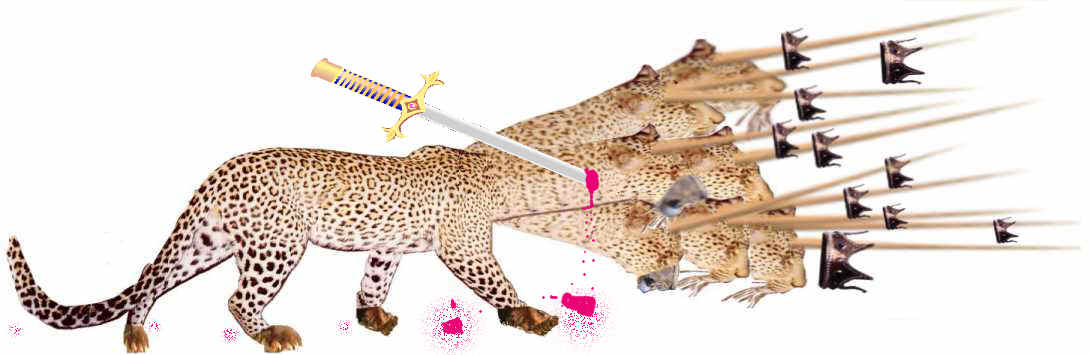

Era of the body
Beast = Church + States or Nations (Revelation 13:5-7) for 42 months prophetic time (1260 literal years) ending on February 15, 1798
Era of the heads
Church continues to exist, but no states or nations are combined with the church during this time after February 15, 1798
Thus, there is NO BEAST during this time.
Era of the horns
Returned Beast = Church + States or Nations. They are combined again.
The Beast Exists Again! (Revelation 13:17)
When the powers of the church are combined with that of the state, it creates a power not really like either one. Without the state, the church cannot persecute very well because it lacks the legal power to carry out its wishes within nations where its members reside, though that may not stop it from trying and sometimes succeeding. The church has no state political power of its own in other nations, but must leverage the political power of the state to its own ends. For this reason, it combines with the state. Bear in mind that this combination must be with OTHER nations for this to work. Being king over its own territory in the Vatican does nothing to give the Papacy power over the citizens of other nations so that it can persecute them. It must combine with other nations to do that.
The church, when in combination with the state, will become drunk and corrupted by a power trip of persecution (this easily happens to any church in such a position). The state will cooperate for whatever reasons it has but will be corrupted because of this cooperative relationship. The state, when in combination with the church, will prosecute cases that it ordinarily would leave in peace.
When church and state are apart, this corroding influence on both powers is greatly reduced or likely absent, and both will likely do a much better job of carrying out their respective roles is society. The combination is ultimately bad for both parties - and for the saints of God for their life on earth. Ultimately, on earth everyone loses. But, in the end, the saints win for they win heaven.
There is another reason this is a bad combination. History demonstrates that separating church and state as separate powers leads to much greater prosperity and much greater participation in churches. That has plainly been demonstrated in America where for more than 200 years, there has been the principle of keeping the church and state out of each others' business. It has been most successful for both sides to do it this way. Unfortunately, there are those in America who don't understand this and are demanding that this change. And, it will change, for Revelation 13 clearly predicts such a change. It will be a sad day for America when this happens. This nation's prosperity and safety are on the line and will be destroyed by removing the separation of church and state. God's protection will be removed when this happens and ultimately, great disasters will befall this country as a direct result of this amalgamation of church and state.
The Beast Formula In Revelation 17
So, how does the beast formula apply to Revelation 17 and how is it revealed in Revelation 17?
Read the following verses to gain understanding of the connection:
Revelation 17:1 And there came one of the seven angels which had the seven vials, and talked with me, saying unto me, Come hither; I will show unto thee the judgment of the great whore that sitteth upon many waters:
Revelation 17:2 With whom the kings of the earth have committed fornication, and the inhabitants of the earth have been made drunk with the wine of her fornication.
The first question that is raised by these two verses is this: Who does the woman, that is described as a whore, represent? To answer this question, consider how a woman is used symbolically in Revelation 12, where we have a woman who is clearly a representation of the church, both before and after the birth of Jesus. If you wish to see evidence that the woman represents the true church, click here for a good write-up on another web site about this issue (don't forget to come back!) She gives birth to a son who is snatched up to God, which clearly represents Jesus.
Therefore, in Revelation 17, to be consistent, we should understand that the woman in Revelation 17 also is representative of a church (all of it, members and church government), but one that has corrupted itself. We know that it has corrupted itself because of several characteristics shown on or said about the woman, which are such things as:
- The title written on her forehead, which said "...MYSTERY, BABYLON THE GREAT, THE MOTHER OF HARLOTS AND ABOMINATIONS OF THE EARTH" (Revelation 17:5). The name of God written on the forehead, which is mentioned several times in Revelation, represents that God's character (remember that the name of God is associated with God's character) is written into the person's thoughts, so represents the character of God in the person, their thinking, and the teachings of God. Therefore, the name Babylon on the forehead represents the character, thinking style, and teachings of Babylon. Hence, this church has accepted the teachings of ancient Babylon and has become like it.
Because a name stands for character, as God clearly demonstrated to Moses
when he showed His back parts to Moses, the name Babylon also stands
for the character of Babylon.
Some get things mixed up and think Babylon here is literal Babylon or
at least includes literal Babylon, but that cannot be for these are symbols,
so cannot represent literal Babylon. Babylon here represents a "city" of
believers who follow the way of the Beast (Revelation 17:18) and stand
opposed to the "city" of believers who follow the way of God
- the New Jerusalem. Remember the "city" in Revelation 11 where
7,000 die as a result of a symbolic earthquake? Babylon in Revelation
17 is a reference to the symbolic city of Babylon, which includes both
a government and ordinary citizens as part of it. Obviously, it is a
symbol of a real power for it says it rules over the kings of the earth,
no small feat.
There are those who claim that the woman named Babylon is a reference to the original city of Jerusalem on the basis of these verses:
Revelation 18:24 And in her (Babylon) was found the blood of prophets, and of saints, and of all that were slain upon the earth.
Luke 11:50 That the blood of all the prophets, which was shed from the foundation of the world, may be required of this generation; (Jesus is speaking about Israel of His time which some see as symbolic of Jerusalem)
Matthew 23:30 And say, If we had been in the days of our fathers, we would not have been partakers with them in the blood of the prophets.
Matthew 23:37 O Jerusalem, Jerusalem, thou that killest the prophets, and stonest them which are sent unto thee, how often would I have gathered thy children together, even as a hen gathereth her chickens under her wings, and ye would not! (here Jesus makes it very clear that Jerusalem is the place that He was talking about that kills the prophets)
While this may have a certain appeal to it, the analysis is incorrect for it ignores the fact that Revelation 16:6 refers to the saints and prophets being killed by those who live during the time of the seven last plagues. Here is what it says:
Revelation 16:6 For they have shed the blood of saints and prophets, and thou hast given them blood to drink; for they are worthy.
Those who do the killing referred to in Revelation 16:6 are not only from Jerusalem, but from all over the world. So, there are prophets that occur at the end of this world's history and evidently some of them end up dead. But on this basis, one cannot specify that Babylon is Jerusalem. Historically, Babylon is a symbol of Rome.
- She commits fornication (Revelation 17:2). Does the church symbolized by the woman in Revelation 12 do this? Of course not, because the woman in Revelation 12 represents the true church that follows all the commandments of God and relies upon God, not the state.
- She was drunk with the "...the blood of the saints, and with the blood of the martyrs of Jesus..." (Revelation 17:7). She had persecuted and killed a lot of the people of God or caused their deaths through others - the kings of the earth that she fornicated with. This clearly is reference to the persecution of the saints that occurs during the 1260 prophetic days. It takes a little time to become drunk, so the "drinking of the blood" has to have occurred at an earlier time before she appears on the seven heads of the scarlet beast. But like all drunks, the drink wears off and she sobers up and plots her return to power. She will recombine with the nations once again and become part of the beast once more during the time of the ten horns. Then she will resume persecution of those who refuse to obey her.
- She has a gold cup in her hand that is "...full of abominations and filthiness of her fornication" (Revelation 17:4). In the Bible, abominations are things that God detests. But obviously these things result from her fornication - or they would not be in this cup. The fornication with the kings of the earth is what permits the killing of the people of God to take place. The fact that she is also shown as drunk with the blood of the saints suggests to many that the cup is full of the blood of the saints that she killed in the past, which results from the persecution and killing that she has been permitted to do because of her alliance with the kings of the earth - her fornication with them prior to 1798. However, it does not say that the cup has blood in it, though this is an attractive idea that might be true, though we really don't know.
- "...the
woman was arrayed in purple and scarlet color..." (Revelation
17:4). These were the "expensive" colors
in John's day. While perhaps not wrong in and of itself,
contrast this with the other woman in Revelation 12,
who was clothed with the sun, which represents Jesus.
This woman is dressed in colors that were considered
royal in John's day, so she has made herself into a
royal person instead of relying upon Jesus to be her
royalty and covering. Prostitutes in Old Testament
Israel used to dress themselves similarly to the way
this woman is dressed as mentioned by the prophet Jeremiah
(Jeremiah 4:30).
Notice that she is not dressed in any clothing which has the color blue, which was found on the priests' garments in the Old Testament Sanctuary. The Bible tells us that the color blue on the fringe of the priests' garments was to remind people to keep ALL of God's commandments (Numbers 15:38-39). The church this woman represents does NOT keep ALL of God's commandments as indicated by the fact that she is lacking this color. - This woman is "...decked with gold and precious stones and pearls..." (Revelation 17:4). These items are things that the Bible often associates with God. Since Babylon represents the city of believers in the way of life of the beast (Revelation 17:18), this city is the evil counterpart of the New Jerusalem and is adorned in counterpart things. The Old Testament Sanctuary had many things with gold in or on them and the New Jerusalem has gold streets (Revelation 21:21). The New Jerusalem has foundations of valuable stones (Revelation 21:19-20). The gates of the New Jerusalem are made of pearls (Revelation 21:21). But Babylon is lacking the symbol of the sun for clothing, so you know that she has the things that give the appearance of having Christ (the gold, precious stones, royal colored clothing, and pearls), but is actually lacking Him.
Old, Historical
Babylon |
The Woman
Named Babylon |
| Religion based on worship of false gods | Religion based on worship of the false god leaders of the beast (popes in Rome), for the leaders claim to be God |
| Combined church and state for the astrologers, priests, magicians, and sorcerers advised and worked in partnership with the king of Babylon | The woman forms illicit relationships with the leaders of nations, relying upon them and controlling them as much as possible so as to maintain hold on power and destroy opposition. |
| The last king of Babylon had the vessels from the tabernacle brought in for his drinking party. This was snubbing God for obviously, in their minds, God was not powerful enough to stop them. This act is a reminder of the death and destruction of the people of God that allowed this to happen | The woman has a golden cup full of the abominations and dirt from her fornications. Those fornications causes the death of God's people, so one can suggest that this cup has their blood in it. But it does not say that. Still, it is a reminder of the death and destruction of the lives of the people of God that allowed this to happen. |
| The king of Babylon captured and killed many in Jerusalem. Many were held captive after the killing was over. | The woman has killed many, but history records that many were also captured and held as prisoners and often tortured. |
| Resided on both sides of the Euphrates River. When the water of the river was diverted, the city was open to attack. | In the future, the "water" will also be drained from the "Euphrates River" and will make Babylon vulnerable to attack and destruction. |
| A city that Ruled over other kings. Note that this city had a government and ordinary citizens inside of it. | Is that great city that rules over other kings of the earth (Revelation 17:18). This symbolic city has a government and ordinary citizens inside of it like any ordinary city. |
| Babylon substituted its own religion for that of the True God. It had a long list of important gods to worship | The woman also substitutes herself for Christ, thus creating her own religion for that of the true God. She also has important saints to "adore" (which really is worship for they pray to them) so has her own long list of gods to worship, including the leaders. |
| The people were commanded to bow down and worship an image of gold in honor of the king of Babylon. Death was the threat if not obeyed. The mark of obedience was that they were not standing after the music played but rather were kneeling towards the image. The king could not prove a person was praying to the image. He figured that if a person was bowing down to it, then you were praying to it. | There will come a time when all who refuse to worship the beast or his image will be threatened with death. The mark of obedience will be obedience to the law requiring worship on Sunday. This may not mean a person agrees but obey and live is going to be the general idea. |
The word mystery is very much part of the Catholic religion, so is certainly descriptive though not unique as an identifier. It is part of the Latin mass. However, it possibly is intended as a prefix for the title of the woman, so possibly conveys that there is a mystery that is to be revealed about her.
The term "mother of harlots" possibly indicates that this woman is something like a whore house madam who has prostitute daughters. This obviously is a reference to the Protestant Religions that came out of Catholicism but who are not visible here. However, they are in combination with the nations in the form of the horns, which are yet future as of the writing of this paragraph in February of 2005.
It also indicates that she is mother of abominations of
the earth. This indicates God is saying that she creates
and is the "mother" of great evil throughout
the world.
This church (Babylon) accepts the teachings of Babylon so completely that God gives her the name Babylon. This represents a change that actually happened in history because the teachers of the Babylonian religion eventually made their way into Rome, where they propagated their ideas throughout Rome. These ideas eventually made their way into the Christian Church in Rome and changed it - forever. When that process happened, the change from the pure woman to the corrupt woman took place for the Christian Church in Rome.
But as you can see from the verses quoted in Revelation 17:1-2, the woman joins herself through fornication with the kings of the earth. Fornication here means an unholy alliance or joining that is not approved by God. We know that is so because, elsewhere in the Bible, God likens the people of Israel to His "wife" (for example, see Isaiah 54:5), which is another reason the symbol of a woman represents a church. Therefore, for the woman to commit fornication, she must join herself to someone other than God, something which God does not approve of at any time.
Just so this is very clear, here is the dictionary definition of fornication:
Fornication - consensual sexual intercourse between two persons not married to each other
Insofar as the author knows, the definition of fornication has not changed significantly in the intervening time since John wrote Revelation 17, so we can safely use the dictionary definition. As you can easily see, neither, either or both of the two persons committing fornication can be married to someone else, but logically are not really married to each other.
The kings of the earth clearly represent the states or nations and perhaps their leaders as well. This symbolism is another reason the woman represents the church and not the Jewish nation. Think about it.
Since the woman represents the church, fornication between the woman and the kings of the earth is describing a combination of church and nations. God never approves such a union because the Church is to be "married" or joined to Him, and is to rely solely upon Him and not upon the state. To depend on the power of the state to carry out its wishes ultimately leads to persecution of others and goes against the will of God, who has never given permission for anyone to persecute others for their beliefs.
Therefore, Revelation 17 gives us this formula:
The Beast formula:
Beast = Woman (church) + kings of the earth (States or Nations)
These must be combined in a legally authorized effort to persecute the people of God. A law or decree must authorize this effort.
But this is the same formula found in Revelation 13:
Beast = Church + Nations (or States)
Remember that the word "Beast" refers to the body of the beast, not including the heads and not including the horns. The tail, legs, and feet are included as part of the beast, however.
Also, do remember that the word "Beast" in the formula above refers to the leopard-like beast of Revelation 13 and the scarlet beast of Revelation 17. This formula DOES NOT apply to the dragon of Revelation 12 or the beasts of Daniel (except for the talking horn of Daniel 7).
This formula is clearly applied to the beast of Revelation 17, for it describes the woman's improper relationship with the kings of the earth AND is presented with the material describing the woman and the beast. John is shown the woman sitting on the scarlet beast and it is explained that she sits on all seven heads which are also seven mountains. Obviously, the subject matter of this chapter is the scarlet beast and the woman. No other beast is being considered at this point in the vision, so one cannot argue that the statements of Revelation 17:1-2 apply to the leopard-like beast of Revelation 13. Revelation 13 has it's own verses that define the beast in the same way, so it is redundant to define the leopard beast in Revelation 17 all over again.
In Revelation 18:7, God says that this woman says in her heart that she is a queen. Queens are normally married to kings, though not always. In this case, there is fornication instead of marriage, but evidently she considers it to be equivalent to marriage. The woman was originally part of God's Church, but during the 1260 days of prophetic time, she changed partners, substituting the kings of the earth for God. For this reason, even though she is not married to the kings of the earth in the sight of God (because of the fornication), she considers herself a queen, not a widow. After February 15, 1798, she is no longer fornicating with the kings of the earth and she considers herself a widow. And when the power the beast represents returns in the future (this is written in December of 2004), she will once again consider herself a queen (see Revelation 18:7).
When Do the Different Body Parts of the Beast Happen? And the Question Everybody Wants to Know, When Do the Heads Occur?
Now, at this point, the author wishes to show how the pattern of the body-head-horns of the beast is used by the angel to explain the history of this beast and how he makes it very clear the correct way to understand it.
First, the angel describes the beast as "was", or in other words, that portion of the history of this power is now past relative to the point in time from which the angel is explaining this to John. Note carefully the fact that the body is described by the angel using a past tense verb - "was". Thus, it is gone, over with, done, and nothing more to it, for the past is generally unchangeable. Here is proof of this from the angel's own words:
Revelation 17:8 The beast ... was, and is not;
In speaking, he says the beast "is not", which implies that it no longer exists as it once did. Hence, it "was". Based on the information given by the angel to this point, we know nothing about where this beast has been. Has it always been in the wilderness? Has it been elsewhere? We only know that at the moment John sees it, the beast is already past history and is then in the wilderness. For this reason, the angel does not even consider it further until it is mentioned that the power it represents will someday return during the time of the ten horns.
In describing the ten horns, he uses future tense language. He says they have not yet received power, so must be in the future. Here is the proof of this from the angel's own words:
Revelation 17:12 And the ten horns ... have received no kingdom as yet;
You should be able to clearly see that the angel says that the beast was and the horns are yet to be. There should be no mistake about that. This is the broad outline of the history of this power.
But what of the heads? Where do they fit in? The answer to this is something that you REALLY don't want to miss! The big picture of the vision is this: The heads come between the time represented by the body - which was - and the horns - which are yet to be. Logically, for any normal beast, the head MUST come between the body and its horns. That is only common sense. Beasts don't exist with horns between their body and head (except maybe in someone's imagination). Though this beast of John's vision has multiple heads, it is generally patterned after a natural beast. Because the angels says that the body was and the horns are yet to be, it is clear that the heads must come between the body and horns. In addition, this clearly indicates that the heads must come AFTER the body and CANNOT run parallel to it in time. Thus, the body parts are used to represent three phases of the history of the power this beast represents. This is identical to the pattern used in Daniel 7 (see the Miller Principle in the Rules of Interpretation for Daniel and Revelation).
Let's highlight what you have learned here:
Body of the Beast - Was - Is in the past and ended in 1798 - the heads followed afterwards
Heads - Present - Logically the heads come between the body and horns and began in 1798
Horns - Future - will occur when the heads are gone
Because the angel has provided a broad outline of the history of this beast, it is only logical that everything else must fit into the broad outline. Therefore, the heads as a group come between the body and horns of the scarlet beast, it should be abundantly clear that the kings MUST fit within the same time frame as the heads because they are identified as being the same as the heads. The heads determine when the kings exist. THERE IS NO ALTERNATIVE TO THIS because the angel's instructions are very clear. It cannot possibly be that the kings determine when the heads exist because the angel has already said that the beast is past and the horns are yet future. If the heads and kings are the same, logically they must fit into the same time period. It is impossible for it to be otherwise. We must let the angel determine things for us, not the other way around. Unfortunately, many seem to think they know better. Or, maybe they get confused by the angel's instructions regarding the kings and forget the general outline the angel has offered us which is totally consistent with what is done in Daniel 7.
This can easily be said in another way. The heads can be said to CONTROL when the kings exist because the heads must occur after the body (and before the horns) and the heads are equated to the kings. This is the exact essence of what the angel DID SAY.
Lets mark this off to make it very clear:
The kings MUST be fitted to the time frame of the heads, not the heads fitted to the time frame of the kings. And the heads MUST come between the time represented by the body and the time represented by the horns.
The angel described things as past, and future, which indicates there is a progression for this power from the era represented by the body, which then progresses to the next era of the same power as represented by the heads, and finally to the last era of the same power as represented by the horns. The graphic below with accompanying verses below it should help the reader to understand what Revelation 17:8-10, 12 really means.
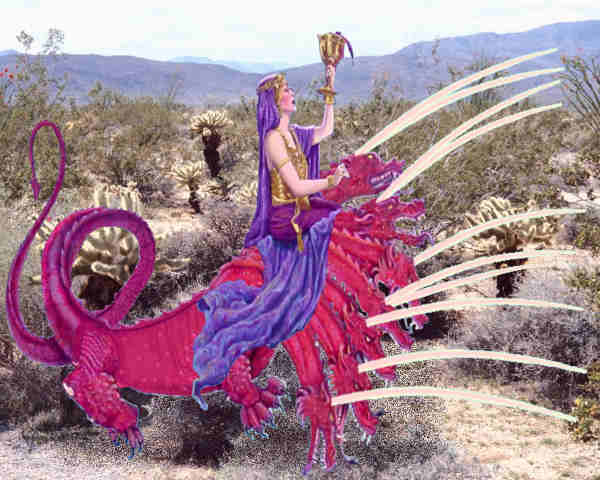
Revelation 17:9 "The seven heads are seven mountains, on which the woman sitteth." These heads come after the body but before the horns - these are in the present to the angel.
Revelation 17:10 "And there are seven kings"
The time period of the heads is the controlling factor. The kings MUST Fit inside the time frame of the heads because the time frame of the heads has already been defined by the angel - after the body and before the horns.
Revelation 17:12 "And the ten horns which thou sawest are ten kings, WHICH HAVE RECEIVED NO KINGDOM AS YET;" - these are in the future to the angel!
Revelation 17:8-10, and 12 clearly tells you that the heads occur after the body and before the horns. There is no way to mistake this if you carefully study it. It also stands to reason that if the heads and kings are the same, then the kings must also occur after the body, just like the heads.
But how is one to explain the "one is" if the beast is Papal (this means Papal control but in combination with the nations) and the heads are also Papal? The problem is that the phrase "one is" seems to suggest that the angel is talking about the time of John, so it suggests that this is probably Pagan Rome. But that is not necessarily so. The authors assert that the "one is" cannot be Pagan Rome. How is this to be explained?
When the angel says "one is", he is speaking of a time that is not in John's time, but a future time which the angel is using as a point of reference. The angel is creating a future point from which he measures all other things as past, present, or future. Therefore, when he said that the beast was, he was saying that relative to the point in time from which he was speaking, the beast actually was - and yet that beast was future to John. It didn't actually exist - yet. In other words, the angel is acting as if he is speaking from a time yet future to John.
The way the angel explained things to John is actually very much comparable to something like time travel. If you have ever watched a science fiction movie about time travel, then this idea should make sense to you. In such movies, one or more persons usually steps into a machine, which then transports them forwards or backwards through time so that their destination is not just a location on earth at the same time, but rather a location at a completely different time than when they started - perhaps a 100 years into the future, or something on that order.
To help you understand the angel's explanation, pretend for a moment that somebody in John's time invented a time machine and traveled forward in time to, say, the year 1950 (now we know that even today science has not come to the place where this can be done, and may never, so remember that this is purely science fiction to help you understand what the angel is saying). Let us pretend also that this time machine has a radio transmitter that can send radio signals back through time and space to the year and place in which John lived, where he could then listen on a receiver to the comments of the time traveler and write down what he heard. In many respects, that is much of what the book of Revelation is all about - recording the future from John's time. So this should not be that hard to understand.
After arriving in the year 1950, our time traveler from John's time could look into a history book written in 1950 and tell John that, for example, the Ottoman Empire no longer existed - which was true in 1950, for the Ottoman Empire officially disappeared in 1923 and was replaced by the present government of modern day Turkey. Our time traveler could rightfully say from the year 1950 that the Ottoman Empire "was" and now "is not", while John would be listening to this from the year 93 AD (or somewhere around that time when he wrote Revelation). The Ottoman Empire did not yet exist in John's day, but to our time traveler, it would be past history. If you carefully think about this for a minute, does it now make sense of how and why the angel could say that the beast "was", and yet this beast did not YET exist in John's time? The beast did not yet exist because it is a Papal dominated beast, and the Papacy as such did not yet exist in John's time. But, from the standpoint of the angel who was speaking as if it were AFTER the year 1798, it was already past history, the heads were, and the horns are yet to be.
Hopefully, this example makes it clear how and why the angel spoke as he did.
The reader should be able to clearly see that given the fact that the body of the beast is the church and state combination that existed during the 1260 years which ended in 1798, then the heads must come after the body, and the horns occur after the heads. A strong implication of this is that the heads CANNOT POSSIBLY be a series of ancient kingdoms that predate the church-state combination of the 1260 years, or even running parallel with this combination. It is absolutely impossible, for the heads must come after 1798, for all seven heads have blasphemy on them (John DID SAY that the beast had blasphemy all over it, something that clearly includes the heads as well as the body). Since the body is defined as being half Papal by the blasphemy on the beast and the heads clearly have blasphemy on them, this makes it clear that all seven heads are Papal. The nations are not part of the picture after 1798, so cannot be part of the heads. This rules out a series of ancient kingdoms for the heads for the blasphemy clearly points directly to the Papacy. The Papacy did NOT exist during the time of, for example, Alexander the Great.
Another problem is that people read Revelation 17:2 and conclude that the woman on the heads is the combination of church and states this verse speaks of. But what they fail to realize is that Revelation 17:2 is a formula for creating a beast - the very part the woman is NOT sitting on for she is sitting on the heads, not the back of the beast itself. Thus, understanding the beast formula is extremely important.
Some have argued that the angel said that five of the heads have fallen, so then claim that this means those five heads are concurrent with the body of the beast. But the angel did not say that. He clearly says the beast was (and is not), the horns will be, so the heads must come in between during the "is not" time. Plus, had he meant to say what they are arguing for, then when he said the following:
Revelation 17:8 The beast that thou sawest was, and is not; and shall ascend out of the bottomless pit, and go into perdition: and they that dwell on the earth shall wonder, whose names were not written in the book of life from the foundation of the world, when they behold the beast that was, and is not, and yet is.
and
Revelation 17:10 And there are seven kings: five are fallen, and one is, and the other is not yet come; and when he cometh, he must continue a short space.
He should instead have said this (now remember, he didn't actually say these verses the way I am going to fashion them below, but I am doing this so you can see what he should have said were their theory right):
Revelation 17:8 The beast that thou sawest and five of the heads were, and the beast and five heads are not; and the beast, but not the five heads, shall ascend out of the bottomless pit, and go into perdition: and they that dwell on the earth shall wonder, whose names were not written in the book of life from the foundation of the world, when they behold the beast and the five heads that were, and the beast and the five heads that are not, and the beast that yet is.
and
Revelation 17:10 And there are seven kings: five are fallen with the beast, and one king is, and the other king is not yet come; and when he cometh, he must continue a short space.
There is no question this last version of these two verses is what he should have said IF their argument was true. It would answer every question anybody has about the question of when the heads exist. But, he didn't say it this way. Why? Because the structure of the verses as he actually said them makes that abundantly clear. He provides a broad outline and everything must fit inside that. Thus, it is very clear and there need be no confusion about this. God sometimes hid things in Bible prophecy, but He could have had the angel say this without revealing too much
For more information about the identity of the beast and the time relationships between the various parts of the beast, click here.
Now, back to the Beast Formula. The Bible reinforces the idea that the formula applies to the scarlet beast. It uses the same identical method in Revelation 17 that is found in Revelation 13, for it tells us that the scarlet beast is covered with blasphemous names or words just like the beast of Revelation 13. Based on the Bible definition of blasphemy and under the circumstances in which God marks the prophetic beasts with blasphemy, we know this requires at least the following two behaviors:
- the claim to be God
- the claim to be able to forgive sins against God's laws
Only one power in the world has ever claimed both of these powers, and that power is the Papacy in Rome. Therefore, the beast MUST have as one of its constituent parts - the Church in Rome.Because the heads of the scarlet beast also have blasphemy on them, they too must all be Papal.
Let us outline that to be certain that you understand it clearly:
The Identity of the Parts of the Scarlet Beast
The body of the scarlet beast is: Roman Church (primarily) combined with the nations
The seven heads of the scarlet beast are: the divisions of the heads of the Roman Church alone, divided by name, and not in combination with the nations since February 15, 1798
So, what does this all mean? It means that the church (woman) has joined with the nations (kings of the earth) during the time of the beast, which we know from history ran from 538 AD to 1798 AD, the 1260 years of prophesied time. Because she is combined with the states or nations during this 1260 year time, she cannot be seated on the body of the scarlet beast (many artists mistakenly depict the woman sitting on the back of the scarlet beast - this is clearly wrong for the angel NEVER says she is sitting there and John never saw her there). When she is shown seated on the body or back of the beast, it represents that during the time from 538 AD to 1798 AD, she existed independently of the state AND simultaneously was in combination with the state, an impossible situation. This isn't quantum mechanics, after all. So, we know this is not true. She should always be shown as the angel described - on the seven heads.
The woman is visible only when seated on the seven heads, which indicates she is visible at a point in time when she is no longer combined with the kings of the earth, or in other words, the era of the seven heads that she is sitting on is AFTER February 15, 1798. She became visible on this date because she was no longer combined with the nations after that date. As a result, time is related to the woman's position on the beast.
Some have objected to this idea of the heads representing Papal powers after 1798 because the woman is the Church, which contains the Papacy. They suggest that she is then sitting on herself. This objection would be valid IF the heads represented the entire Catholic Church exactly as she does, but since the Papacy is a subset of the Catholic Church, it does not include the membership. Thus, the identity of the heads and the woman is different, though not by much, but the difference is sufficient. The fact is, she must be shown sitting on the heads in order to depict that she is sitting on a source of power. In the prophecies of Daniel and Revelation, an animal always represents a power. The woman is not the power of the Catholic Church (remember that she represents the WHOLE Catholic Church, not just the Papacy), but rather her power is centered in the Papacy. For this reason, so she is shown sitting on the source of her power - the heads. But, as a whole, it accurately depicts the situation because she and the heads are together as they should be. That makes a complete symbolic unit representing a power.
Some wonder why the woman is not shown sitting upon the heads of the leopard-like beast of Revelation 13 if the two beasts represent the same power. The reason she is not shown on the leopard-like beast is because her history and the history of the ten horns is to be explained in Revelation 17, and to show her in Revelation 13 would confuse the issues. Moreover, the focus of Revelation 13 is the 42 months of the beast and the subsequent development of the image beast, while the focus of Revelation 17 is the judgment time of the woman and the activity of the ten horns that follows the seven heads. For this reason, the woman is shown in Revelation 17 but not in Revelation 13. But because of the explanation of the Beast Formula in Revelation 13, we know that the woman is part of the beast, even if she is not shown.
Woman Alone - No Kings of the Earth combined with her in fornication (Revelation 17: 1-3, 9). She is now a widow (see Revelation 18: 7)
Returned Beast = Woman + Kings of the
earth
(Revelation 17:11). She is no longer a widow because she has recombined
with the kings of the earth. (Revelation 18:7)
Before finishing this web page, there are several final issues that should be covered.
Did the Beast Return In 1929?
There are some who teach that the beast returned in 1929. But based on the Bible definition of the beast, this cannot be so. Their reasoning is that the beast returned when the Vatican was returned to the Papacy by the Lateran Treaty of 1929 between the Italian Government and the Papacy. They believe this restored the political power of the Papacy by making the pope king over his own territory again, thereby combining the church with its own state and giving it political power.
According to the Encyclopedia Britannica (2005 edition), the Lateran Treaty was effective from 1929 to 1985. The provisions were that the Italian Government was recognized by the Papacy with Rome as its capital, and the the Italian Government recognized Vatican sovereignty over the Vatican. It also gave the pope full independence of the Italian Government. The treaty also essentially made Catholicism the state religion of Italy. In 1985, this situation was changed and Catholicism was no longer the state religion of Italy.
While it is true that this treaty made the Papacy king over its own territory again, this does NOT meet the requirements to make a beast. To make a beast according to Revelation 17:2, the woman must commit fornication with the kings of the earth. Note the plural form of the word king. This means there must be more than one of them to make a beast, and clearly the Bible is saying that she commits fornication with OTHERS. She must be in an unholy alliance with the kings of the earth for the purpose of control and persecution of the people of God for a beast to be created.
Is the Papacy the king of the earth? Of course not. The Bible says the following about the woman:
Revelation 17:18 And the woman which thou sawest is that great city, which reigneth over the kings of the earth.
This clearly implies that the woman rules over the kings of the earth, but is not herself the king of the earth. What is interesting is that though the Papacy is represented in Daniel 7 as the Talking Horn, which is described as a king, in contrast to that in Revelation 17 and 18, it indicates that she considers herself a queen when she is combined with the kings of the earth in fornication. Here is proof of that:
Revelation 18:7 How much she hath glorified herself, and lived deliciously, so much torment and sorrow give her: for she saith in her heart, I sit a queen, and am no widow, and shall see no sorrow.
This statement is from Revelation 18, which is showing history as it is for her just before her destruction. This is during the time that the woman is again combined with the kings of the earth, so she is then part of the beast.
If giving the Vatican political power by being given power over it's own territory constituted making a beast, then could we say that she fornicates with herself? Is that possible? Think about it.
What exactly did the 1929 treaty accomplish? Did the Papacy get political power by this treaty? It got its own territory which gave it the standing of an independent nation equal to that of other nations, but political power is something that is not gained by simply having territory or being called the ruler of an independent kingdom. Many rulers have found that out just before their peoples hung them out to dry. It requires working with people, convincing them of your cause, and building a power base from that. That process did not begin in 1929, but rather instead began with the Second Vatican Ecumenical Council (often called simply Vatican II), which was largely run by Pope Paul VI (1963-1978). This council ran from 1962 to 1965. The previous pope, John XXIII (1958-1963), began Vatican II but was unable to follow up on it and build a power base because he died before it was finished. But Pope Paul VI took that conference and its results, and built on it to begin building a power base, a process that has been continued with great success by Pope John Paul II.
One needs to remember that the power base the Papacy has is based on its ability to influence the members it has in OTHER countries. It has very few citizens that permanently reside at the Vatican, so has virtually no political power over a people of its own. It also cannot control the laws in other nations where most of its members reside so has little influence over them. However, in time, this power will grow to the point where legal power will once again be given to the Papacy over the people of God. When that happens, the beast will have been restored.
The growth of Papal power since Vatican II is the ascension of the beast. We can accurately say that the ascension of the beast out of the abyss began with Vatican II, not with the 1929 Lateran treaty.
The beast was originally created by the decree of Justinian in 533 that become enforceable in 538 AD. This decree gave the pope 2 powers:
- to be head bishop over all other Christian bishops
- to prosecute "heresy" (as he defined it)
It was the second power that combined the church with the nations. To be able to prosecute heresy required the cooperation of the nations, so it is THIS ELEMENT that constituted the joining point of the woman and the nations. This condition was removed on February 15, 1798 in Rome.
As a result of the law that created the beast, the regaining of political power by the Papacy is not sufficient to create the beast. Here is the condition necessary to create the beast, which Daniel 7:25 clarifies for us:
Daniel 7:25 And he shall speak great words against the most High, and shall wear out the saints of the most High, and think to change times and laws: and they shall be given into his hand until a time and times and the dividing of time.
The phrase in red is the key requirement of the prophecy and nothing else matters. To have the people of God given into the hand of the beast (Talking Horn) can only be matched in history by the power to prosecute heresy.
Therefore, until the church and the nations legally recombine for the purpose of persecution of the people of God, the beast will not return. No such combination exists in Europe as of the writing of this paragraph (February of 2005). The beast has NOT returned. But it soon will after the death of John Paul II.
The Healing of the Head Wound. Is It the Same As the Return of the Beast?
There are many who think that the healing of the head wound of the Revelation 13 leopard-like beast is the same as the return of the beast, or the revival of Papal power. This is an unfortunate concept, for it is incorrect. The return of the beast out of the abyss and the healing of the head wound are not the same things.
The problem has its roots in the belief of many people that the beast went away with the removal of Pope Pius VI from the Papal throne. This has its roots in a lack of understanding in what created the beast and why that is a separate event from the removal of Pope Pius VI from the Papal throne.
The purpose of this section is to help you understand why these two events are different, separate, and distinct events.
Here is how the wrong understanding comes about.
In history, Justinian, the Eastern Roman Emperor in Constantinople, wrote a decree in 533 AD which became enforceable in Rome in 538 AD. This decree gave the pope two powers, which were:
- The right to be head bishop
- The right to punish heresy, which meant the pope could work through the state to punish heretics
The power granted to the pope to punish heresy is the power that combined the church and the nations. It is this combination that created the beast of Revelation 13. Therefore, to cause the beast to be removed or to go away, one must remove the power combining the church and the nations from the pope of Rome. Does this make sense to you? Think of it this way: the same right given to the pope to punish heresy that created the beast in the beginning can be removed, thereby removing the beast.
1260 years after the pope was given these powers by Justinian, they were removed by order of the French general of Napoleon through a legal decree that he wrote and published throughout Rome. This took place on February 15, 1798. On that very day, the French decree removed the Papal government from power, which in turn destroyed the combination of the church and the nations. From that day onward, the church was on its own. and could not legally persecute those it considered heretics. It would have to learn to live with them because it could no longer count on the nations to prosecute the heretics for it. Pope Pius VI was the pope on the Papal throne when this decree was published in Rome. Since the decree was published in Rome, there is no question that the decree became effective on the very day it was published because there would have been no delay in implementing that order. The pope had to know about it that very day because he was in Rome and would have been notified by the French authorities.
Because the French
feared that Pope Pius VI would mount an insurrection against
the French authorities, he was taken captive on February
20, 1798, 5 days AFTER the
decree was published and hauled off to prison in
Many look back on these two events and confuse them as one event. But that is a false concept because the decree of February 15, 1798, removed the beast from power. It was gone the very day the decree was published. The second event, the removal of the pope from the Papal throne five days later, caused the head wound prophesied in Revelation 13. Though they are linked events, they still are not one and the same. They are separate events. The important point is this: The beast went away five days before the head wound occurred.
Once the beast was out of the way, which was on the very day the decree was published - February 15, 1798 - then the heads began to have their day of power. When the pope was taken captive five days later, it was the Papal head of Pope Pius that was wounded. Take care to note that it was NOT the beast itself that was wounded, but rather the head. The Bible makes it clear that it is a head that was wounded.
The Bible does refer to the wound to the beast in Revelation 13:12, 14, but it is clear in verse 3 that it is the head rather than the body that was wounded. The word beast in verses 12 and 14 seems to be used as a generic term for the power represented by every part of the beast, including the heads. It also indicates that in the time represented in verses 12 and 14, the beast is about to return.
And this proves that one of the heads CANNOT be the beast, for the beast was already gone 5 days before the head wound actually occurred. If one of the heads was the beast, then the beast had to remain past the date on which the pope was taken captive. But history proves that wrong because the decree was issued 5 days BEFORE the pope was taken captive. Therefore, the beast was gone and no head could be the beast because you cannot wound a head that is not there!
Now, the next logical question is this: how is the beast to return?
Since the beast was created by combining the church with the nations, logically, to bring the beast back, one must again see the same combination of the church combined with the nations. When that happens, then the beast will have returned.
Of course, the final logical question is this: how and when is the head wound healed?
Since the head wound was created by removing Pope Pius VI from the Papal throne, to heal the head wound one must reverse the original damage. How do you do that when Pope Pius VI was already dead? The answer to that is easy: You put a Pope Pius back on the Papal throne! Of course, once Pius VI was dead, you could not restore him. It should be obvious that Pius is the name of the head that was wounded since that is the name of the pope removed from the throne, so therefore, if one wounds the head named Pius, one must heal the head named Pius.
In the prophecy given in Revelation 13, IF the head named Pius had died as a result of the head wound, then you would know that there would be no more Pope Pius' after the removal of Pius VI. Of course, John said that the wound was healed, so we know that more Pope Pius' would return to the Papal throne after Pius VI. In summary, because a Pius was removed from the throne to cause the wound in the first place (at the point of force, no less), to reverse or heal the wound one must put a Pius back on the throne. Does this make sense to you?
Was that done? Was another Pope Pius put back on the Papal throne so that the prophecy of the head being healed was fulfilled? YES! In the winter of early 1800, Napoleon relented and permitted the Papal Cardinals to gather to elect a new pope. The newly elected pope selected the name - PIUS VII !!! The head was healed right then and there as of that moment! There was a new Pius placed back on the Papal throne just a little over 2 years after the previous Pius was removed. Thus, a Pius was taken captive and killed, constituting the head wound. And later, another Pius was elected to the throne and this healed the head wound. There would indeed be more Pius' on the Papal throne during the time of the 7 heads.
There were a total of 12 Pope Pius' throughout Papal history, with six of them since Pius VI was removed in 1798. The last Pope Pius existed from 1939 to 1958 (Pope Pius XII). There will be no more Pope Pius' because his name is one of the five heads that fell prior to the reign of Pope Paul VI, the pope line who is the "one is" of Revelation 17:10. He will never exist again.
Now, in summary, the going away of the beast was accomplished by the decree of the French authorities which eliminated the Papal government, thus separating the church and nations. This happened on February15, 1798. Five days later, pope Pius VI was arrested and sent to France to die in prison. This last event constituted the head wound.
The head wound was healed a little more than 2 years later when the Papal cardinals elected a new Pope Pius VII. And someday in the not too distant future, the beast will return when the church and nations once again unite to persecute the people of God as before.
Hopefully, this is now clear to the reader. The healing of the head wound and the return of the beast are two different, separate, and distinct events.
The ascension of the beast referred to in Revelation 17 is another event related to the return of the beast. It refers to the gradual rise in power of the Papacy that will accomplish the return of the beast in the future (written in January of 2005). This process began with Vatican II, which occurred in the 1960s and continues to this very day.
Final Summary
In summary, the beast formula is very important. This formula simply states that when you read of or see a picture of the scarlet beast with the woman sitting upon it, remember the following formula:
BEAST = WOMAN (CHURCH) + KINGS OF THE EARTH (STATES or NATIONS)
OR, in short form:
BEAST = CHURCH + NATIONS (or States)
These must be combined in a legally authorized effort to persecute the people of God. A law or decree must authorize this effort.
Just remember that the word "Beast" refers to the body of the beast, not including the heads and not including the horns. The legs, tail, and feet are included as part of the beast.
Remember that the word "Beast" in the formula above refers to the leopard-like beast of Revelation 13 and the scarlet beast of Revelation 17. This formula DOES NOT apply to the dragon of Revelation 12 or the beasts of Daniel (except for the talking horn of Daniel 7).
If any picture you see depicting the woman and the scarlet beast of Revelation 17 has the woman seated on the back of that beast, you now know that is wrong. The Bible never said she was sitting upon the back of the scarlet beast, and it is impossible that she could be doing that because then she would be simultaneously combined with the kings of the earth and independent of them - an impossibility. Instead, it says she is sitting upon the seven heads.
The woman cannot be combined with the kings of the earth when she is sitting on the heads because she is alone at that time. It is the combination of her and the states that makes up the beast, so where you see her, you know the states are not involved with her. It really is this simple. And because she sits on all seven heads at once, they occur at the same time she does. The heads cannot be a series of ancient kingdoms, for that is impossible since she is alone only after February 15, 1798, and they are ALL with her. She and the heads fill the time together from that date until the seven heads are done (which will be when John Paul II dies), and then the ten horns begin their day of power.
The author hopes this helps the reader understand the woman and the beast. For further information, see other articles on this web site.
All Bible Verses Containing the Word Blasphemy, Blasphemous, or Blaspheme
Old Testament Verses
Leviticus 24:11 And the Israelitish woman's son blasphemed the name of the LORD, and cursed. And they brought him unto Moses: (and his mother's name was Shelomith, the daughter of Dibri, of the tribe of Dan:)
Leviticus 24:16 And he that blasphemeth the name of the LORD, he shall surely be put to death, and all the congregation shall certainly stone him: as well the stranger, as he that is born in the land, when he blasphemeth the name of the LORD, shall be put to death.
2 Samuel 12:14 Howbeit, because by this deed thou hast given great occasion to the enemies of the LORD to blaspheme, the child also that is born unto thee shall surely die.
1 Kings 21:10 And set two men, sons of Belial, before him, to bear witness against him, saying, Thou didst blaspheme God and the king. And then carry him out, and stone him, that he may die.
1 Kings 21:13 And there came in two men, children of Belial, and sat before him: and the men of Belial witnessed against him, even against Naboth, in the presence of the people, saying, Naboth did blaspheme God and the king. Then they carried him forth out of the city, and stoned him with stones, that he died.
2 Kings 19:3 And they said unto him, Thus saith Hezekiah, This day is a day of trouble, and of rebuke, and blasphemy: for the children are come to the birth, and there is not strength to bring forth.
2 Kings 19:6 And Isaiah said unto them, Thus shall ye say to your master, Thus saith the LORD, Be not afraid of the words which thou hast heard, with which the servants of the king of Assyria have blasphemed me.
2 Kings 19:22 Whom hast thou reproached and blasphemed? and against whom hast thou exalted thy voice, and lifted up thine eyes on high? even against the Holy One of Israel.
Psalms 44:16 For the voice of him that reproacheth and blasphemeth; by reason of the enemy and avenger.
Psalms 74:10 O God, how long shall the adversary reproach? shall the enemy blaspheme thy name forever?
Psalms 74:18 Remember this, that the enemy hath reproached, O LORD, and that the foolish people have blasphemed thy name.
Isaiah 37:3 And they said unto him, Thus saith Hezekiah, This day is a day of trouble, and of rebuke, and of blasphemy: for the children are come to the birth, and there is not strength to bring forth.
Isaiah 37:6 And Isaiah said unto them, Thus shall ye say unto your master, Thus saith the LORD, Be not afraid of the words that thou hast heard, wherewith the servants of the king of Assyria have blasphemed me.
Isaiah 37:23 Whom hast thou reproached and blasphemed? and against whom hast thou exalted thy voice, and lifted up thine eyes on high? even against the Holy One of Israel.
Isaiah 52:5 Now therefore, what have I here, saith the LORD, that my people is taken away for naught? they that rule over them make them to howl, saith the LORD; and my name continually every day is blasphemed.
Isaiah 65:7 Your iniquities, and the iniquities of your fathers together, saith the LORD, which have burned incense upon the mountains, and blasphemed me upon the hills: therefore will I measure their former work into their bosom.
Ezekiel 20:27 Therefore, son of man, speak unto the house of Israel, and say unto them, Thus saith the Lord GOD; Yet in this your fathers have blasphemed me, in that they have committed a trespass against me.
Ezekiel 20:28 For when I had brought them into the land, for the which I lifted up mine hand to give it to them, then they saw every high hill, and all the thick trees, and they offered there their sacrifices, and there they presented the provocation of their offering: there also they made their sweet savor, and poured out there their drink offerings.
Ezekiel 35:12 And thou shalt know that I am the LORD, and that I have heard all thy blasphemies which thou hast spoken against the mountains of Israel, saying, They are laid desolate, they are given us to consume.
New Testament Verses
Matthew 9:3 And, behold, certain of the scribes said within themselves, This man blasphemeth.
Matthew 12:31 Wherefore I say unto you, All manner of sin and blasphemy shall be forgiven unto men: but the blasphemy against the Holy Ghost shall not be forgiven unto men.
Matthew 15:19 For out of the heart proceed evil thoughts, murders, adulteries, fornications, thefts, false witness, blasphemies:
Matthew 26:65 Then the high priest rent his clothes, saying, He hath spoken blasphemy; what further need have we of witnesses? behold, now ye have heard his blasphemy.
Mark 2:7 Why doth this man thus speak blasphemies? who can forgive sins but God only?
Mark 3:28 Verily I say unto you, All sins shall be forgiven unto the sons of men, and blasphemies wherewith soever they shall blaspheme:
Mark 3:29 But he that shall blaspheme against the Holy Ghost hath never forgiveness, but is in danger of eternal damnation:
Mark 7:22 Thefts, covetousness, wickedness, deceit, lasciviousness, an evil eye, blasphemy, pride, foolishness:
Mark 14:64 Ye have heard the blasphemy: what think ye? And they all condemned him to be guilty of death.
Luke 5:21 And the scribes and the Pharisees began to reason, saying, Who is this which speaketh blasphemies? Who can forgive sins, but God alone?
Luke 12:10 And whosoever shall speak a word against the Son of man, it shall be forgiven him: but unto him that blasphemeth against the Holy Ghost it shall not be forgiven.
Luke 22:65 And many other things blasphemously spake they against him.
John 10:33 The Jews answered him, saying, For a good work we stone thee not; but for blasphemy; and because that thou, being a man, makest thyself God.
John 10:36 Say ye of him, whom the Father hath sanctified, and sent into the world, Thou blasphemest; because I said, I am the Son of God?
Acts 6:11 Then they suborned men, which said, We have heard him speak blasphemous words against Moses, and against God.
Acts 6:13 And set up false witnesses, which said, This man ceaseth not to speak blasphemous words against this holy place, and the law:
Acts 13:45 But when the Jews saw the multitudes, they were filled with envy, and spake against those things which were spoken by Paul, contradicting and blaspheming.
Acts 18:6 And when they opposed themselves, and blasphemed, he shook his raiment, and said unto them, Your blood be upon your own heads; I am clean: from henceforth I will go unto the Gentiles.
Acts 19:37 For ye have brought hither these men, which are neither robbers of churches, nor yet blasphemers of your goddess.
Acts 26:11 And I punished them oft in every synagogue, and compelled them to blaspheme; and being exceedingly mad against them, I persecuted them even unto strange cities.
Romans 2:24 For the name of God is blasphemed among the Gentiles through you, as it is written.
Colossians 3:8 But now ye also put off all these; anger, wrath, malice, blasphemy, filthy communication out of your mouth.
1 Timothy 1:13 Who was before a blasphemer, and a persecutor, and injurious: but I obtained mercy, because I did it ignorantly in unbelief.
1 Timothy 1:20 Of whom is Hymenaeus and Alexander; whom I have delivered unto Satan, that they may learn not to blaspheme.
1 Timothy 6:1 Let as many servants as are under the yoke count their own masters worthy of all honor, that the name of God and his doctrine be not blasphemed.
2 Timothy 3:2 For men shall be lovers of their own selves, covetous, boasters, proud, blasphemers, disobedient to parents, unthankful, unholy,
Titus 2:5 To be discreet, chaste, keepers at home, good, obedient to their own husbands, that the word of God be not blasphemed.
James 2:7 Do not they blaspheme that worthy name by the which ye are called?
Revelation 2:9 I know thy works, and tribulation, and poverty, (but thou art rich) and I know the blasphemy of them which say they are Jews, and are not, but are the synagogue of Satan.
Revelation 13:1 And I stood upon the sand of the sea, and saw a beast rise up out of the sea, having seven heads and ten horns, and upon his horns ten crowns, and upon his heads the name of blasphemy.
Revelation 13:5 And there was given unto him a mouth speaking great things and blasphemies; and power was given unto him to continue forty and two months.
Revelation 13:6 And he opened his mouth in blasphemy against God, to blaspheme his name, and his tabernacle, and them that dwell in heaven.
Revelation 16:9 And men were scorched with great heat, and blasphemed the name of God, which hath power over these plagues: and they repented not to give him glory.
Revelation 16:11 And blasphemed the God of heaven because of their pains and their sores, and repented not of their deeds.
Revelation 16:21 And there fell upon men a great hail out of heaven, every stone about the weight of a talent: and men blasphemed God because of the plague of the hail; for the plague thereof was exceeding great.
Revelation 17:3 So he carried me away in the spirit into the wilderness: and I saw a woman sit upon a scarlet colored beast, full of names of blasphemy, having seven heads and ten horns.